Your first multi-day bike trip doesn’t need a spreadsheet, color-coded calendar, or months of preparation. It needs enough planning to stay safe and comfortable—and enough flexibility to handle what you can’t predict.
I’ve guided dozens of first-time bike tourists through their initial adventures. The ones who succeed don’t have better gear or superior fitness. They have realistic expectations and permission to figure things out on the road.
The Only Questions That Matter
Before obsessing over gear lists and route planning, answer these three questions honestly.
Can You Ride 40-60 Miles in a Day?
If yes, you can tour. Daily touring distances are rarely extreme—it’s the consistency that differs from day rides. You’ll be pedaling 40-70 miles for seven consecutive days, not setting single-day distance records.
If you can’t ride 50 miles yet, spend a few weeks building up. No rush. But once you can handle that distance, you’re physically ready for a week-long tour.
Where Will You Sleep?
This decision shapes your gear list more than anything else.
Hotel/motel touring requires far less equipment. You need the bike, clothes, basic repair supplies, and a credit card. No tent, no sleeping bag, no cooking gear. This is the easiest way to start.
Campground touring adds weight but offers flexibility and savings. Budget for a 3-pound tent, 2-pound sleeping bag, and basic camp supplies. Many campgrounds have showers and amenities.
Wild camping (stealth camping) requires more experience and comfort with uncertainty. Save it for your second or third tour.
How Will You Carry Stuff?
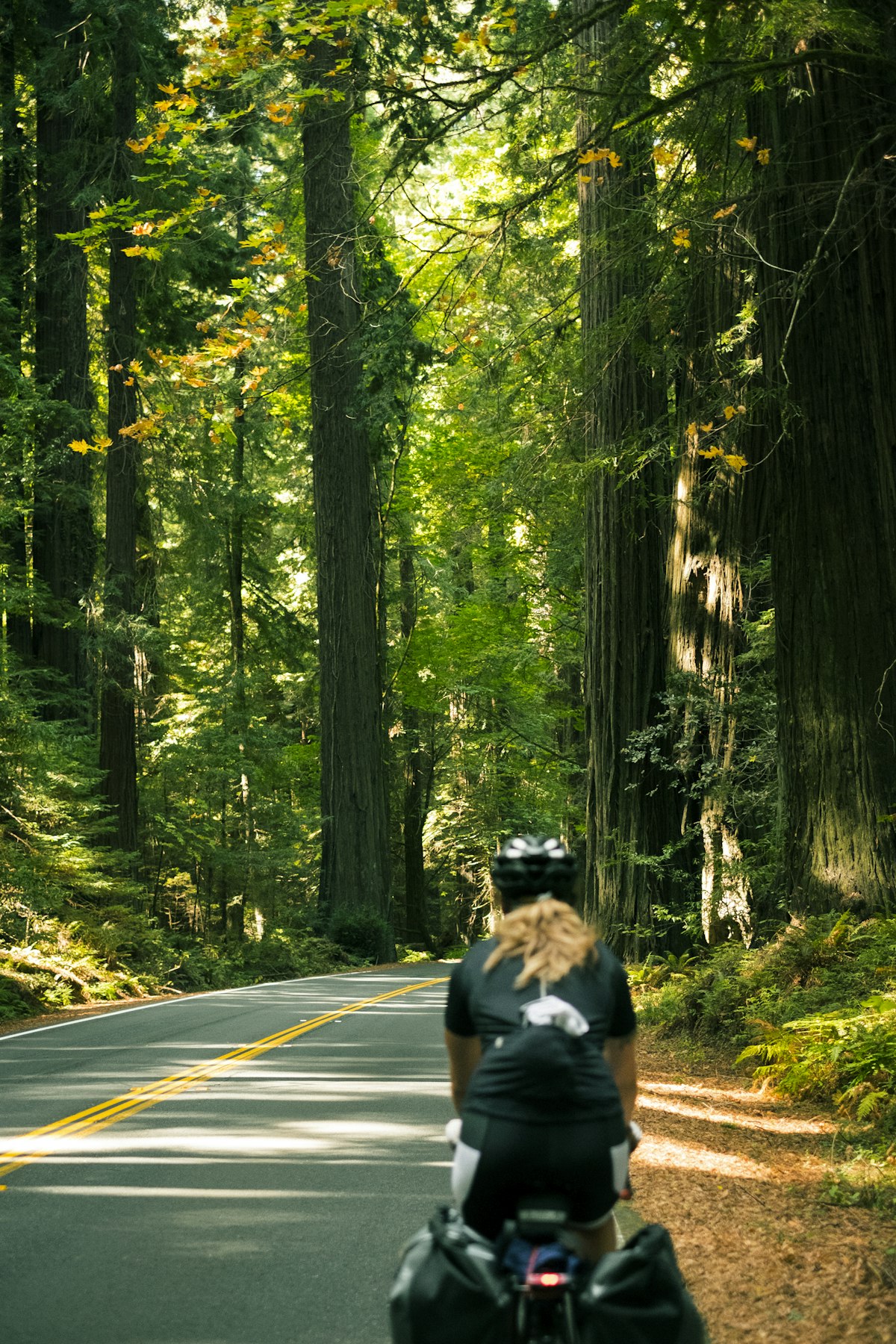
Panniers mount on racks and offer maximum capacity. Classic touring solution. Heavy but stable.
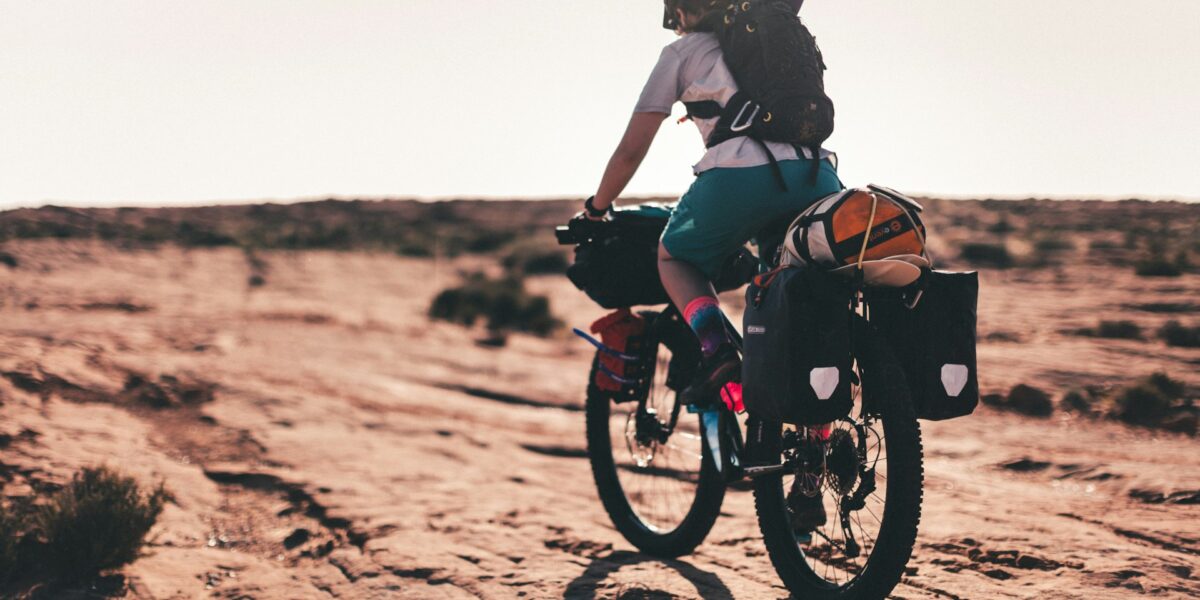
Bikepacking bags attach directly to your frame, handlebars, and seatpost. Lighter and more aerodynamic, but limited capacity.
Trailers handle heavy loads and work on any bike. Less common but effective for certain tours.
Here’s the secret: borrow before buying. Most people switch systems after their first tour anyway. Ask friends, check local bike co-ops, or rent. Don’t invest hundreds until you know what works for you.
Route Selection for First-Timers
Your first tour should have escape routes. If something goes wrong—mechanical failure, injury, weather, or simply not enjoying it—you need options to cut things short gracefully.
The Best Starter Routes
Rail trails work perfectly. They’re flat, car-free, and pass through towns every 10-20 miles. The C&O Canal Towpath, Katy Trail, Great Allegheny Passage, and Erie Canal Trail exist for exactly this purpose.
Loop routes starting and ending at your car give psychological comfort. You’re never committing to being far from your starting point.
Avoid remote wilderness routes for trip one. You need access to food, water, lodging, and bike shops while you figure out your systems. The middle of nowhere is for tour number three.
Daily Distance Planning
Plan for 40-50 miles per day on your first tour. Yes, you can ride further. But touring isn’t about daily distance—it’s about waking up each morning able to do it again.
Factor in time for meals, rest, mechanical issues, and actually enjoying where you are. A 50-mile day with breaks takes 6-8 hours. Plan arrivals for mid-afternoon, leaving buffer for problems.
The Test Weekend
Before committing to seven days, do an overnight. This single trip prevents most first-tour disasters.
Ride 30-40 miles to a campground or cheap motel. Spend the night. Ride home. That’s it.
This simple overnight reveals critical information:
- Saddle compatibility — Your saddle might feel fine for day rides but cause issues on consecutive days. Better to discover this 25 miles from home than 200 miles from home.
- Packing problems — What shifts around? What’s hard to access? What did you bring that you never touched?
- Missing items — What did you wish you’d packed? A headlamp? Extra layers? Different food?
- Reality check — Did you enjoy it? Do you want to do more? Some people discover touring isn’t for them—that’s valuable information before investing in a week-long trip.
Gear: The Minimum Viable Loadout
For a first hotel-touring trip, you need shockingly little:
- Bike in working condition
- 2 sets of cycling clothes (alternate daily, wash one while wearing the other)
- 1 set of casual clothes for evenings
- Rain jacket
- Flat repair kit (tubes, levers, pump)
- Multi-tool
- Phone and charger
- Cash and cards
- Toiletries
That’s it. Everything else is optional. Add camping gear if camping, add layers if cold, but the core kit fits in a single handlebar bag and a frame bag.
Stop Overthinking
Most first tours fail from overpreparation, not underpreparation. Analysis paralysis keeps people planning forever instead of riding.
You don’t need the perfect bike. Your current bike, with minor adjustments, will work fine.
You don’t need the lightest gear. The extra two pounds won’t matter.
You don’t need the ideal route. Any route with towns and escape options will teach you what you need to know.
You need a bike that works, clothes for weather, tools for flats, and money for food. The rest you’ll figure out on the road—that’s half the point of adventure cycling.
The Most Important Preparation
Mental preparation matters more than physical preparation. Accept that things will go differently than planned. You’ll be slower or faster than expected. Weather will change. You’ll make route adjustments.
Flexibility isn’t failure—it’s the skill that separates successful tourists from those who quit on day two because reality didn’t match their spreadsheet.
Your first tour will be messy, imperfect, and educational. That’s exactly how it should be. The second tour will be better. The third will feel natural. But none of that happens until you start the first one.

Stay in the loop
Get the latest adventure cycling world updates delivered to your inbox.