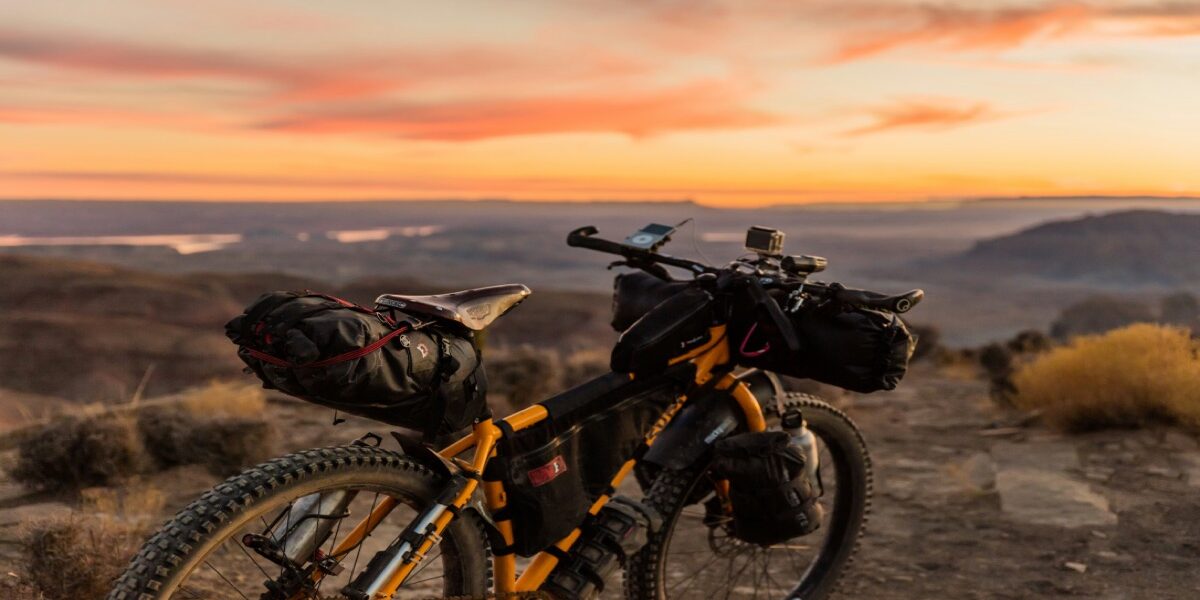
Off-road touring gear has gotten complicated with all the ultralight debates and bikepacking trends flying around. As someone who destroyed a carbon fork on day three of a Patagonia trip and learned exactly what gear actually matters in the wilderness, I learned everything there is to know about equipment that survives when you’re days from help. Today, I will share it all with you.
This article includes affiliate links. We may earn a commission at no extra cost to you.
That’s what makes gear selection endearing to us four-week wilderness riders – it’s not about weight optimization or Instagram aesthetics. It’s about stuff that won’t leave you stranded. This guide covers the complete gear system for serious off-road touring: the bike setup, carrying capacity, sleep system, navigation tools, and repair kit that handles month-long wilderness routes.
The Bike Foundation
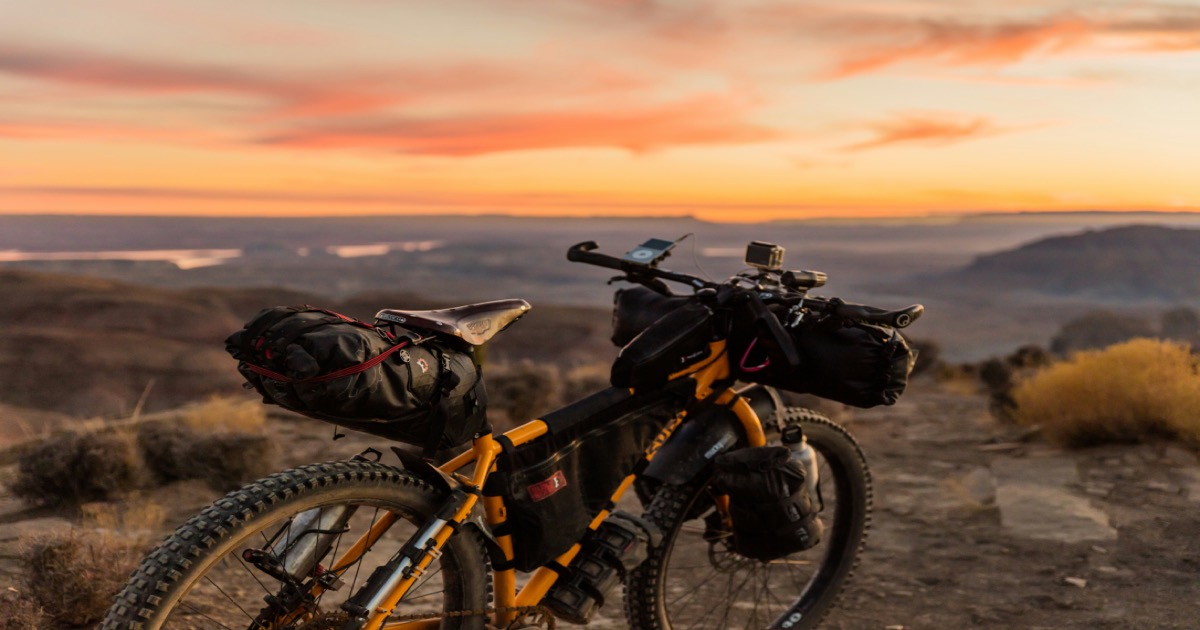
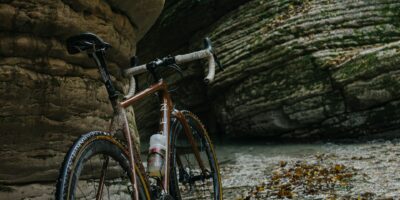
Steel frames dominate long-distance off-road touring for good reason. Aluminum fatigues. Carbon cracks. Steel bends – and a bent steel tube can often be straightened enough to limp to civilization, while a cracked carbon frame ends your trip immediately. I’ve seen this happen twice on group tours.
The Surly Ogre and Kona Sutra remain popular choices, offering wide tire clearance, rack mounts, and geometry designed for loaded riding. Custom builders like Crust, Rawland, and Singular create purpose-built touring machines that outperform production frames but cost significantly more.
Tire clearance matters enormously. Minimum 2.0-inch capability, preferably 2.2 inches. Rough roads destroy narrow tires through constant sidewall impacts. Wider tires at lower pressures float over washboard roads that would shake apart skinnier setups.
Disc brakes are mandatory. Rim brakes lose effectiveness in mud, rain, and after extended descents. Probably should have led with this section, honestly – brake choice is that important. Hydraulic disc brakes offer superior modulation and power, but mechanical disc brakes can be repaired with common parts in remote areas. For true wilderness routes, the repairability of mechanical brakes often outweighs the performance advantage of hydraulic systems.
Drivetrain Choices
Simplicity beats performance. A 1x drivetrain with a wide-range cassette eliminates front derailleur complications entirely. Modern 11-50T or 10-51T cassettes provide climbing gears as low as any triple crankset while reducing mechanical complexity.
Chain retention becomes critical with 1x systems. A clutched rear derailleur prevents chain drops on rough terrain. Add a narrow-wide chainring for additional security. In three years of rough riding, I’ve had zero dropped chains with this combination.
Gear range matters more than gear quantity. You need a bail-out gear for climbing loaded at the end of a long day, and a cruising gear for flat sections. Everything in between is negotiable. My current setup uses a 32T chainring with 11-46T cassette – not the widest range available, but sufficient for any terrain I’ve encountered.
Avoid electronic shifting on remote tours. Batteries die. Wires break. The Di2 system that works flawlessly in road racing becomes a liability when you’re 200 miles from a charging outlet. Mechanical shifting with quality cables remains the reliable choice for serious wilderness routes.
Wheel and Tire Selection
Wheel durability starts with spoke count. Standard 32-spoke wheels handle loaded touring. For rough terrain, consider 36-spoke builds. The additional weight penalty of four extra spokes per wheel is negligible compared to the reduced likelihood of catastrophic wheel failure on remote trails.
Hub quality matters more than hub features. Sealed cartridge bearings resist contamination better than cup-and-cone designs in dusty conditions. Higher engagement counts (faster pickup) help on technical climbs. Avoid lightweight racing hubs; they’re not designed for loaded abuse.
Tubeless tires revolutionized off-road touring. The ability to run lower pressures improves traction and comfort dramatically. Sealant handles small punctures automatically. Carry a tube as backup, but expect to rarely need it with a properly maintained tubeless setup. I went tubeless five years ago and have never looked back.
Tire selection balances durability against rolling resistance. Schwalbe Marathon tires defined touring for decades but roll slowly on pavement. The Schwalbe G-One and Specialized Pathfinder offer better efficiency with acceptable durability. For truly rough routes, the Vittoria Terreno Dry or Teravail Sparwood provide the aggressive tread pattern needed for loose surfaces.
Carry at least one spare tire on routes where help is distant. Sidewall cuts and severe tire damage can’t be fixed trailside. A folding spare weighs 200 grams and saves trips.
Carrying Systems
The bikepacking versus panniers debate generates endless discussion. The practical answer: both systems work. Choose based on your specific route and preferences.
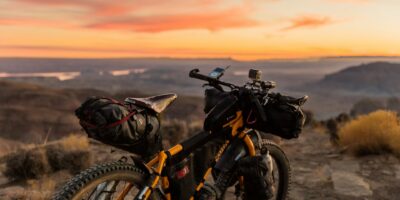
Bikepacking bags integrate with the frame, keeping weight centered and low. They excel on technical singletrack where panniers would catch on obstacles. However, capacity limits typically max out around 40-45 liters – adequate for minimalist setups but tight for extended self-supported touring.
Panniers offer greater capacity and easier organization. A traditional four-pannier setup with rear rack provides 60+ liters of space plus additional options for frame bags and handlebar rolls. The trade-off is added weight, potential frame stress on rough terrain, and worse handling on technical trails.
My preferred approach combines both systems: frame bag and seat bag from bikepacking geometry, plus a rear rack for a single pannier or stuff sacks. This provides roughly 50 liters of capacity with reasonable weight distribution and handling. Took me several tours to settle on this configuration.
Front carrying capacity helps balance heavy loads. A handlebar bag or small front rack distributes weight between both wheels. Some riders add a front rack and small panniers for the most balanced setup, though this increases complexity and weight.
Sleep System Strategy
Shelter, sleep, and warmth form the foundation of overnight touring. Underinvesting here ruins trips faster than any equipment failure. Your body needs recovery to perform day after day; skimp on sleep gear and your riding suffers.
Tent selection balances weight against livability. A bivy sack weighing 400 grams might seem attractive, but after three nights of condensation and claustrophobia, you’ll regret not bringing a proper tent. Aim for something in the 1-1.5 kg range for solo touring – heavy enough to weather storms, light enough to carry without suffering.
Freestanding tents simplify campsite selection. Non-freestanding tents require specific ground conditions and staking points. When you arrive exhausted at dusk, the ability to pitch anywhere matters more than saving 200 grams.
Sleeping bag temperature ratings lie. Manufacturers test under ideal conditions: well-fed, well-hydrated sleepers on thick pads. Real-world performance typically runs 10-15 degrees warmer than rated. For three-season touring, a bag rated to 20F handles most conditions with a liner for extra warmth when needed.
Down versus synthetic insulation depends on climate. Down packs smaller and lighter but fails when wet. Synthetic maintains insulation when damp but weighs more and compresses less efficiently. For humid climates or routes with significant rain risk, synthetic makes sense. For desert and alpine routes, down remains the better choice.
Sleeping pad R-value determines ground insulation. Anything below R3 leaves you cold on cool nights. For three-season use, R4-R5 provides comfortable insulation. Inflatable pads pack small but require care to avoid punctures; foam pads are indestructible but bulky. Many touring cyclists carry both: a primary inflatable and a foam sit pad that doubles as emergency insulation.
Navigation and Communication
GPS devices have transformed wilderness navigation, but electronic dependence creates vulnerability. Dead batteries, device failure, and satellite blind spots all occur on long tours. A layered navigation approach provides redundancy.
Primary navigation uses GPS. Dedicated cycling GPS units like the Garmin Edge series provide turn-by-turn routing, offline maps, and long battery life. Smartphone apps like Ride with GPS and Komoot work equally well but drain phone batteries quickly – problematic when your phone also serves as camera and emergency communication device.
Secondary navigation uses paper. Yes, paper maps still matter. A 1:100,000 scale topo map covering your planned route weighs almost nothing and never runs out of battery. When your GPS fails or displays incorrect data, paper provides ground truth. I always carry paper backup now.
Download offline maps for every device before departing. Test them in airplane mode. Cellular coverage doesn’t exist on most remote touring routes. If your navigation depends on live data, you’re one canyon away from being lost.
Satellite communicators enable emergency contact and location sharing on remote routes. The Garmin InReach and Zoleo provide two-way texting and SOS functionality worldwide. Monthly service plans run $15-50 depending on features. For wilderness routes, this technology provides essential safety backup.
Share your route and check-in schedule with someone at home. Daily location pings via satellite take five seconds and provide confirmation that you’re safe. If you miss a scheduled check-in, your emergency contact knows to investigate.
Repair Kit Essentials
The distinction between essential repairs and nice-to-have tools becomes clear after your first major mechanical issue in a remote location. Carry tools that address common failure modes. Leave specialized tools for bike shop visits.
Multi-tool selection: minimum requirements include 4, 5, and 6mm hex keys, Phillips and flathead screwdrivers, T25 Torx, and chain breaker. Quality matters here – cheap multi-tools strip fasteners and break under stress. The Lezyne and Crank Brothers tools have proven reliable over thousands of miles.
Tire repair kit includes: tire levers, patch kit, spare tube, spare tire (folding), tire boot material, and sealant for tubeless setups. Practice tube changes and tire mounting at home. The skills seem obvious until you’re trying to seat a tight tire with cold fingers at dusk.
Spare parts worth carrying: brake pads, derailleur hanger (specific to your frame), quick links for your chain, extra chain pins, shift and brake cables, zip ties in multiple sizes, electrical tape, and small bolt assortment. These items weigh almost nothing collectively but address common trail failures.
Add a spoke wrench and know how to true a wheel. Small wobbles from broken or loose spokes compound into large problems if ignored. Field truing doesn’t need to be perfect – just functional enough to continue riding.
First aid kit: basic wound care supplies, pain medication, anti-diarrheal, blister treatment, and personal medications. Customize based on your health needs and trip length. Backcountry medical courses like NOLS Wilderness First Aid provide valuable skills for handling remote emergencies.
Clothing and Protection
Layering systems handle temperature variation better than single heavy garments. A base layer, insulating layer, and shell layer combine to address conditions from freezing nights to warm afternoon riding.
Base layers should manage moisture. Merino wool excels here, providing odor resistance and comfortable performance across temperature ranges. Synthetic options dry faster but develop odor quickly. Two base layer tops – one for riding, one for sleeping – covers most needs.
Insulating layers provide warmth when stopped. Down or synthetic puffy jackets pack small and provide substantial warmth. Arm warmers, knee warmers, and leg warmers address temperature transitions during riding without requiring full clothing changes.
Shell layers block wind and rain. A quality rain jacket rated for cycling (with longer back hem and ventilation options) handles wet conditions. Full rain pants see less use but save miserable days when storms arrive. Water-resistant rather than waterproof fabrics often perform better for active use, allowing vapor escape while blocking light rain.
Sun protection deserves more attention than most cyclists give it. Long hours of exposure add up. Arm sleeves with UPF protection, quality sunglasses, and liberal sunscreen application prevent cumulative skin damage that appears years later.
Food and Water Strategy
Caloric needs on loaded touring exceed what most riders expect. Budget 4,000-5,000 calories daily for hard riding. This seems excessive until you bonk at mile 40 on day five and realize you’ve been under-fueling the entire trip.
Resupply frequency determines carrying capacity. Routes with daily town stops require minimal food carrying – just enough for emergencies. Remote routes with 3-4 day gaps between resupply demand serious food capacity and planning.
Dense, calorie-rich foods maximize carrying efficiency. Nuts, nut butters, olive oil, cheese, and dried meats provide more calories per gram than pasta or rice. Sugar for immediate energy, fat and protein for sustained fuel.
Water capacity depends on climate and sources. Desert routes require carrying 5+ liters. Routes with frequent streams might need only 2 liters of carrying capacity plus filtration. The Sawyer Squeeze and Katadyn BeFree filters provide lightweight purification. Carry purification tablets as backup – they weigh nothing and save you if your primary filter fails.
Cooking adds weight but expands food options. Hot meals improve morale significantly on cold nights. Alcohol stoves like the Trangia provide simple, reliable cooking with fuel available in most countries. Canister stoves offer faster boiling and easier operation but require specific fuel canisters that may not be available everywhere. Some cyclists skip cooking entirely, relying on cold food and restaurant stops – a valid approach for routes with regular town access.
Building Your Own System
Gear lists from other cyclists provide starting points, not answers. Your body, preferences, climate, and routes differ. What works for a 150-pound cyclist in temperate forests may fail for a 200-pound cyclist in desert heat.
Test everything before committing to a major tour. A weekend overnighter reveals fit issues, packing problems, and gear failures in recoverable circumstances. Refine your system through successive shorter trips before attempting extended wilderness routes.
Document your gear and its performance. After each trip, note what worked, what failed, and what you never used. This record guides future purchases and eliminates pack weight over time.
The best gear system is the one you trust completely. That trust comes from miles, from failure and recovery, from refining your kit trip after trip until everything has earned its place in your bags.
Komoot users should follow our Komoot offline navigation checklist to download the route, confirm region access and test it in airplane mode.
Stay in the loop
Get the latest adventure cycling world updates delivered to your inbox.