You’ve got a week off, a bike that can handle some dirt, and a half-formed plan to ride somewhere and camp. But every time you look for advice, you run into the same split: bikepacking or bike touring? People use the terms interchangeably online, and the gear recommendations blur together just enough to make it confusing.
They’re not the same thing. Not even close, really. The difference runs deeper than which bags you strap on — it changes where you can ride, how many miles you’ll cover each day, and what kind of trip you’re actually committing to.
The Core Difference: It’s Not Just About the Bags
Bike touring is loaded panniers on racks, paved or gravel roads, and 60–100 mile days. You follow routes that have services along the way — motels, gas stations, a diner every 40 miles or so. Think the Adventure Cycling Association TransAm route. Your bike is heavy, your pace is steady, and you never really worry about whether the next town has a grocery store because it does.
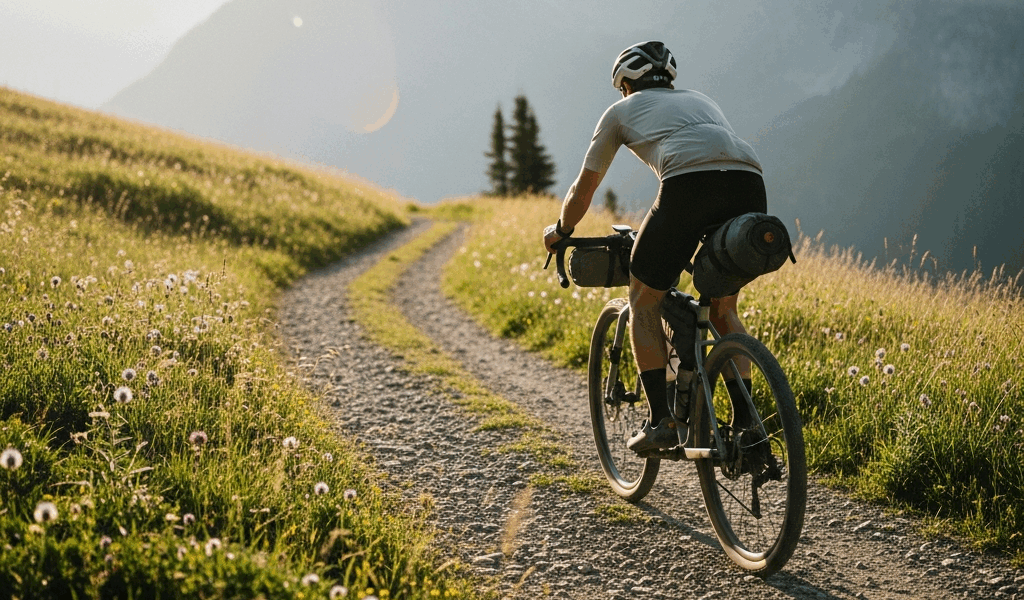
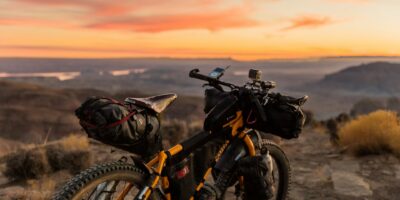
Bikepacking is frame bags, seat packs, and handlebar rolls strapped directly to the frame — no racks at all. You’re riding singletrack, doubletrack, and forest service roads where panniers would snag on every branch and rock. Daily mileage drops to 30–60 miles because the terrain is technical. You camp in primitive spots, filter water from creeks, and carry everything you need because there’s no town for the next 50 miles.
This distinction hits you the moment you pick a route. A touring setup on rocky doubletrack is genuinely miserable — panniers sway on rough terrain, and that extra weight makes technical sections sketchy. A bikepacking setup on a flat paved ride works fine, sure, but you’re leaving carrying capacity on the table for no reason.
Gear: Why the Bags Are Different
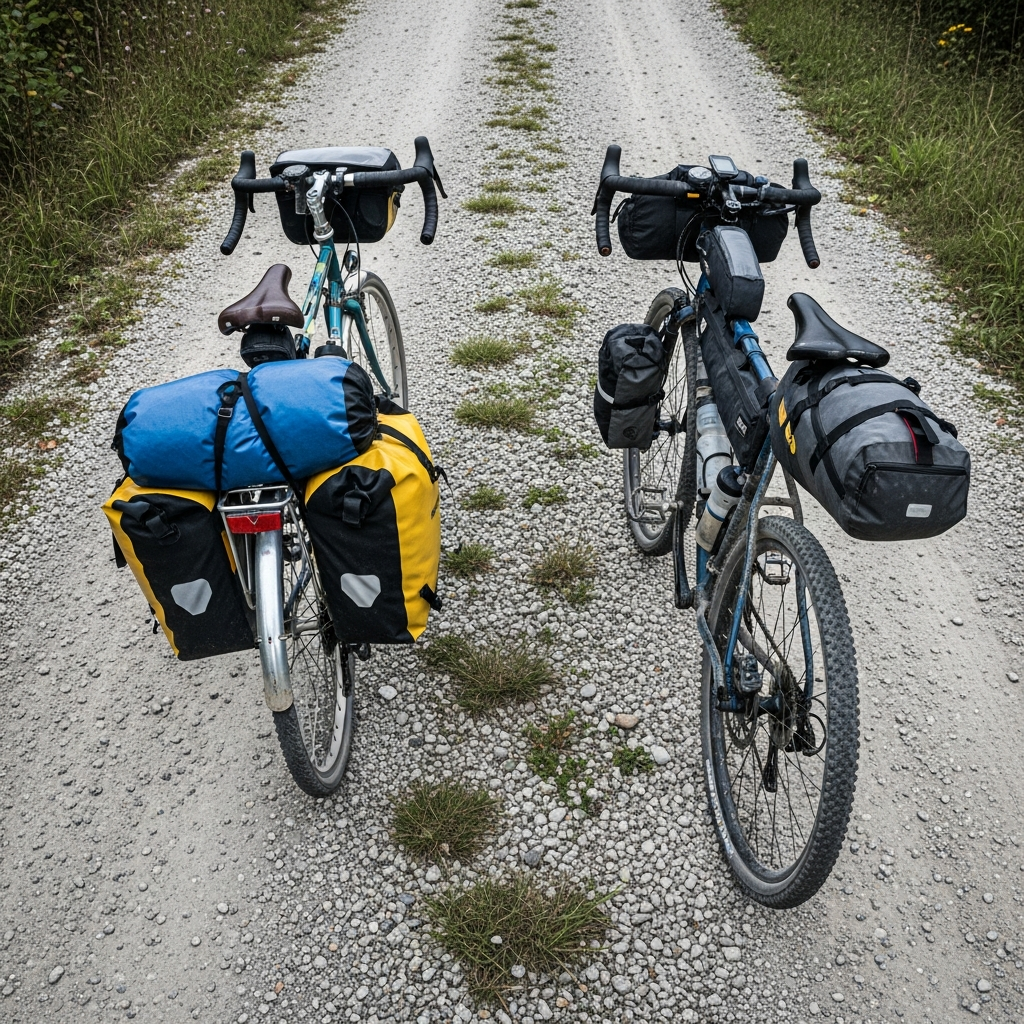
Touring panniers give you 40–60 liters of total capacity across four bags. Loading them is straightforward — they open like little suitcases, and you can organize by category. Camp stove in this one, clothes in that one, maybe a paperback stuffed on top. The trade-off is weight. Fully loaded panniers push a touring rig past 60 pounds, and all that low-mounted weight creates a pendulum effect on rough surfaces.
Bikepacking bags total 15–25 liters across a frame bag, seat bag, and handlebar roll. Everything sits tight against the frame, so the bike handles like a slightly heavier version of your normal ride — even on singletrack. But 15–25 liters forces some brutal decisions. You’re trimming toothbrush handles and having serious internal debates about whether a camp pillow deserves the space. That constraint is sort of the point, though: less gear means a lighter bike, which means you can ride trails that a loaded tourer simply can’t.
I ran a touring setup for three years before switching to bikepacking bags. The gear swap took an afternoon. The mindset shift took months. Touring rewards the pack-more-worry-less approach. Bikepacking rewards discipline — every gram you shave is another technical section you can clean instead of walking.
Which Approach for Which Rider
Choose bike touring if you want to cover big miles on roads, you like the idea of sleeping in a real bed every few nights, you value self-sufficiency without obsessing over weight, or — and this is the big one — this is your first multi-day bike trip. Touring is forgiving. You can carry extra food, extra layers, a repair kit that handles every scenario. If things go sideways, civilization is usually within a day’s ride.
Choose bikepacking if you want to ride trails and backcountry routes that panniers physically can’t reach, you’re already comfortable with primitive camping and limited resupply options, and you have at least a few multi-day rides under your belt. Bikepacking isn’t harder than touring — it’s a different thing entirely. But jumping into a fully loaded bikepacking rig in remote terrain without multi-day experience is how people end up cold, underfed, and calling someone for a ride home.
My honest recommendation if you’re asking this question for the first time: start with touring. Do a 3–5 day road or gravel tour with panniers on a well-supported route. Pay attention to what you actually use each day versus what sits in the bottom of the bag untouched for the entire trip. That information is worth more than any gear review. Then decide whether you want to go lighter and push deeper into the backcountry.
Can You Do Both? The Hybrid Approach
Plenty of riders do. A lightweight frame bag plus a small rear rack with a single pannier covers most gravel routes without going all-in on either setup. The Adventure Cycling Association route network is perfect for hybrid rigs — mostly gravel and paved roads, not technical singletrack that punishes racks.
The hybrid approach falls apart at two extremes: pure singletrack (where any rack is a liability) and extended remote tours (where 15–25 liters doesn’t hold enough food for 3+ days between resupply). For everything between those two poles — and that covers the vast majority of gravel routes and rail trails — a hybrid setup is honestly the most practical option.
A lot of cyclists end up owning both setups eventually. Touring rig for road trips and supported rides. Bikepacking rig for backcountry weekends. They’re different tools for different jobs. Trying to force one approach onto every route is where the frustration usually starts.
The Verdict
Bikepacking and bike touring solve different problems. Touring is the better starting point — more forgiving, higher daily mileage, easier logistics. Bikepacking is where you go when road touring starts feeling too civilized and you want access to places that panniers can’t reach. Pick based on where you want to ride, not which setup looks better in photos. The trails don’t care about your aesthetic.

Stay in the loop
Get the latest adventure cycling world updates delivered to your inbox.