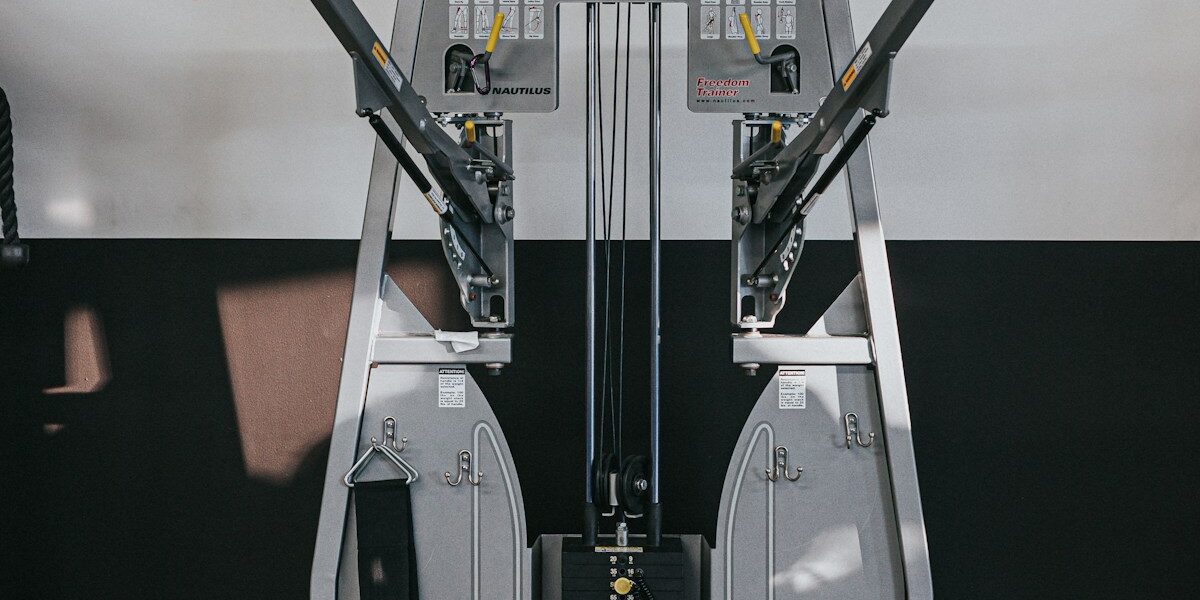
As someone who spent years doing countless crunches without seeing much improvement in my cycling, I learned the hard way that core strength for cyclists isn’t about six-pack abs. It’s about functional strength that keeps you stable when you’re grinding up a climb or hammering through the final miles of a century. That’s what led me to cable machines, and honestly, they’ve transformed my training in ways I didn’t expect.
Why Cable Training Works for Cyclists

Here’s what makes cables different: they provide constant tension throughout the entire range of motion—unlike free weights where gravity determines resistance direction. I remember the first time my coach explained this to me. He said, “Your core is working constantly on the bike, not just lifting once and relaxing. Cables mirror that sustained engagement.” He was right. The constant tension you get from cable exercises actually mimics what your core experiences during those long rides where you’re fighting to maintain your position hour after hour.
Benefits of cable core training:
- Builds anti-rotation strength essential for efficient power transfer
- Develops the sustained endurance your core needs for long rides
- Allows training in multiple planes of motion
- Adjustable resistance for progressive overload
- Lower spinal compression than weighted crunches
Essential Cable Ab Exercises for Cyclists
1. Pallof Press (Anti-Rotation King)
I probably should have led with this because the Pallof press is, hands down, the single most important core exercise for cyclists. My physical therapist introduced me to it after I was complaining about wasting energy with excessive torso movement during sprints. The first time I tried it, I thought, “This looks too easy.” Then I actually did it with proper form and realized my core was shakier than I wanted to admit.
How to perform:
- Set the cable at chest height
- Stand perpendicular to the machine, feet shoulder-width apart
- Hold the handle at your chest with both hands
- Press the handle straight out, arms fully extended
- Hold for 2-3 seconds, resisting the cable’s pull to rotate you
- Return to chest and repeat
Sets/Reps: 3 sets of 10-12 reps per side, with 2-3 second holds
2. Cable Woodchop
The woodchop builds rotational power and control—useful for out-of-saddle efforts and sprinting where controlled rotation helps generate power. I learned this exercise from a mountain bike racer who swore it helped him power through technical climbs without throwing his bike all over the trail.
High-to-Low Woodchop:
- Set the cable at the highest position
- Stand sideways to the machine, feet wider than shoulders
- Grip the handle with both hands above your shoulder
- Pull diagonally down across your body to the opposite hip
- Rotate through your torso, not just your arms
- Control the return to starting position
Low-to-High Woodchop:
Reverse the movement—set cable low and pull diagonally upward. This variation emphasizes different muscle fibers and mimics the upward drive during standing climbs. That’s what makes it endearing to us climbers who spend more time out of the saddle than in it.
Sets/Reps: 3 sets of 12-15 reps per side
3. Cable Crunch
Unlike floor crunches, cable crunches allow you to add progressive resistance while maintaining a neutral spine position. I used to do regular crunches until my back started bothering me. My sports medicine doc suggested cables instead, and the difference was immediate—same core engagement, zero back pain.
Kneeling Cable Crunch:
- Attach a rope handle to the high pulley
- Kneel facing the machine, holding the rope behind your head
- Keep your hips stationary throughout the movement
- Crunch down, bringing your elbows toward your knees
- Focus on curling your spine, not pulling with your arms
- Control the return, feeling the stretch in your abs
Sets/Reps: 3 sets of 15-20 reps
4. Standing Cable Rotation
This exercise builds rotational control through your entire core, particularly the obliques. My experience with this one is that it looks deceptively simple but absolutely torches your sides if you do it right.
How to perform:
- Set the cable at chest height
- Stand sideways to the machine, arms extended holding the handle
- Rotate your torso away from the machine while keeping hips stable
- Your arms stay straight—the rotation comes from your core
- Control the return against the cable’s resistance
Sets/Reps: 3 sets of 12-15 reps per side
5. Cable Dead Bug
The dead bug teaches core bracing while moving your limbs—exactly what happens during pedaling. I know the name sounds ridiculous, but stick with me here. This exercise is brilliant because it forces you to keep your core stable while your legs are moving independently, which is literally what cycling is.
How to perform:
- Set the cable low and attach a single handle
- Lie on your back with the handle in one hand, arm extended toward the machine
- Start with both knees bent at 90 degrees, feet off the floor
- Slowly extend the opposite leg while maintaining a flat lower back
- The cable tries to pull you into extension—resist it
- Return and repeat, alternating legs
Sets/Reps: 3 sets of 8-10 reps per side
Sample Cable Core Workout for Cyclists
Perform this routine 2-3 times per week, ideally after riding or on separate days. I’ve learned that trying to do heavy core work before a ride is a recipe for disaster—your position on the bike just falls apart when your core is pre-fatigued.
| Exercise | Sets | Reps | Rest |
|---|---|---|---|
| Pallof Press | 3 | 10 per side | 45 sec |
| Cable Woodchop (high-to-low) | 3 | 12 per side | 45 sec |
| Kneeling Cable Crunch | 3 | 15-20 | 45 sec |
| Standing Cable Rotation | 3 | 12 per side | 45 sec |
| Cable Dead Bug | 2 | 8 per side | 60 sec |
Total time: approximately 20-25 minutes
Programming Considerations
Weight Selection
Core exercises should never be ego lifts. I made this mistake early on, loading up the cable machine to impress absolutely nobody, and all I got was sore hip flexors and terrible form. Choose weights that allow perfect form for all reps. If you’re swinging or using momentum, reduce the weight. For anti-rotation exercises like the Pallof press, you should feel challenged but able to maintain a completely stable torso.
Timing Around Rides
- Before rides: Skip heavy core work—fatigued core muscles compromise your position on the bike
- After rides: Ideal time for core training while muscles are warm
- Rest days: Good option for dedicated core sessions
- Before key workouts: Allow 24-48 hours recovery from intense core training
Progression
Progress cable core exercises by:
- Increasing hold times (especially for Pallof press)
- Adding reps before adding weight
- Slowing down the movement for more time under tension
- Finally, increasing resistance
Signs Your Core Needs Work
If you experience any of these, prioritize core training. I’ve dealt with most of these at various points, and they’re all signs I was neglecting this crucial aspect of training:
- Lower back pain during or after long rides
- Excessive upper body movement when pedaling hard
- Difficulty maintaining aero position
- Hip drop or rocking visible in your pedal stroke
- Fatigue in your back before your legs during climbs
The Payoff
Consistent cable core training translates directly to the bike. You’ll hold your position longer without discomfort, transfer power more efficiently through your core to the pedals, and reduce the energy wasted through unnecessary upper body movement. Most cyclists notice improvements within 4-6 weeks of dedicated core training—better posture on the bike, less back fatigue, and more watts making it to the pedals where they belong. My experience has been that the gains come gradually, but once you feel that rock-solid stability on a long climb, you’ll never skip core day again.