Language prep for cycle touring has gotten complicated with all the apps and translation devices flying around. As someone who’s toured through Spain, France, Germany, Switzerland, and Austria over the past decade, I learned everything there is to know about which phrases actually matter when you’re exhausted, lost, or have a mechanical. Today, I’m sharing the 50 phrases that saved my tours repeatedly—and the pronunciation notes that helped me get understood.
Probably should have led with this: I once spent two hours trying to explain a broken spoke in Barcelona using hand gestures and Google Translate. Learning “I have a flat tire” and “Can you repair this?” in Spanish would have solved it in five minutes. These phrases exist for a reason.
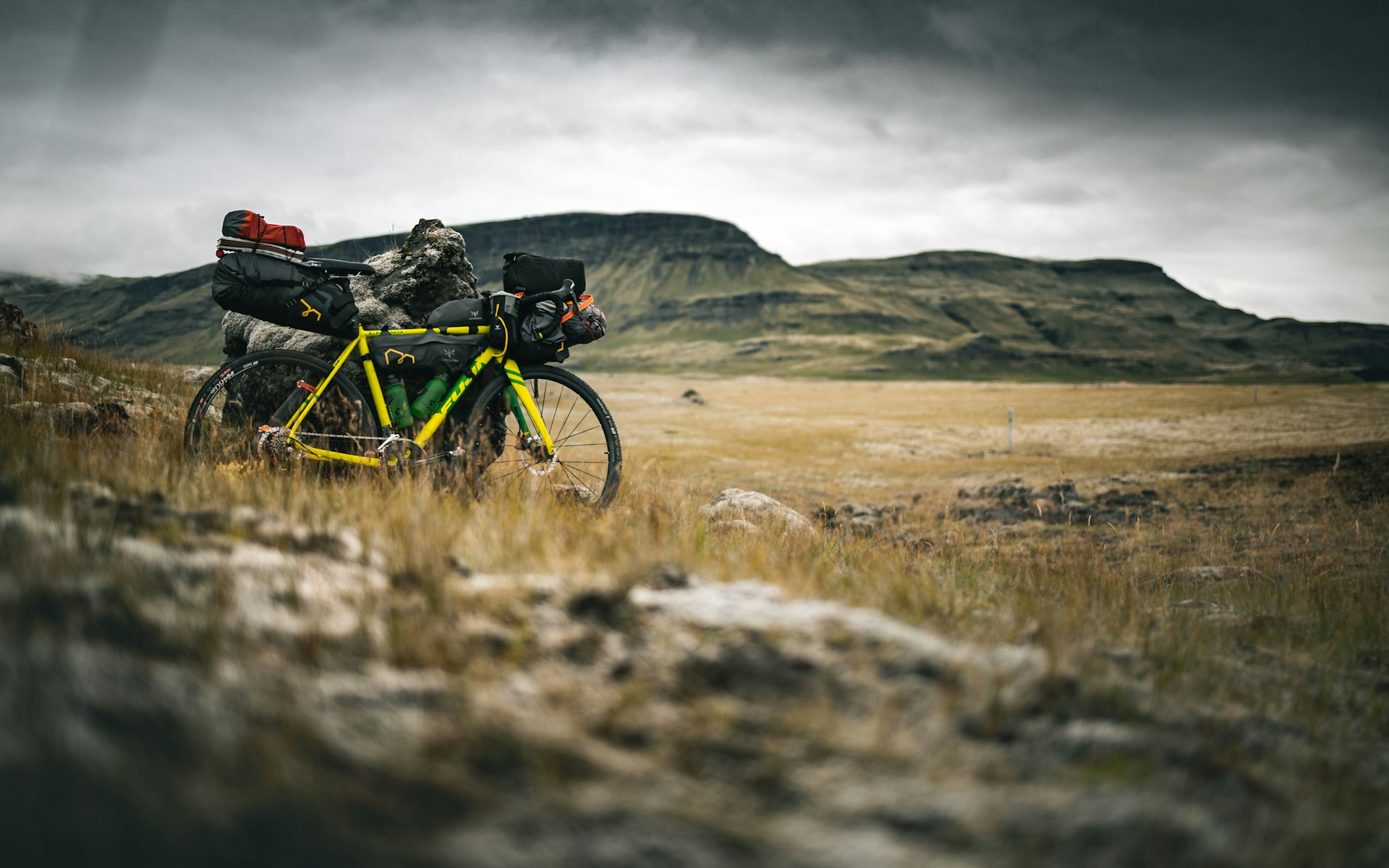
Language barriers don’t stop touring cyclists, but basic phrases transform the experience. Pointing at things works for transactions; words work for connection. That’s what makes learning a few phrases endearing to local shop owners and hosts—you’re trying. The fifty phrases here cover emergencies, repairs, food, accommodation, and the small interactions that turn strangers into temporary friends.
Emergency Phrases
These matter most. Learn them first. I memorize these before entering any new country.
Help!
- Spanish: ¡Ayuda! (ah-YOO-dah)
- French: Au secours! (oh suh-KOOR)
- German: Hilfe! (HIL-fuh)
I need a doctor.
- Spanish: Necesito un médico. (neh-seh-SEE-toh oon MEH-dee-koh)
- French: J’ai besoin d’un médecin. (zhay buh-ZWAN dun may-duh-SAN)
- German: Ich brauche einen Arzt. (ikh BROW-khuh EYE-nen artst)
Call the police.
- Spanish: Llame a la policía. (YAH-meh ah lah poh-lee-SEE-ah)
- French: Appelez la police. (ah-puh-LAY lah poh-LEES)
- German: Rufen Sie die Polizei. (ROO-fen zee dee poh-lee-TSAI)
I’ve had an accident.
- Spanish: He tenido un accidente. (eh teh-NEE-doh oon ak-see-DEN-teh)
- French: J’ai eu un accident. (zhay oo un ak-see-DAWN)
- German: Ich hatte einen Unfall. (ikh HAH-tuh EYE-nen OON-fal)
Bicycle Repair and Parts
Bike shop interactions require specific vocabulary. I’ve used every single one of these at some point.
Where is the nearest bike shop?
- Spanish: ¿Dónde está la tienda de bicicletas más cercana? (DOHN-deh es-TAH lah TYEN-dah deh bee-see-KLEH-tahs mahs sehr-KAH-nah)
- French: Où est le magasin de vélos le plus proche? (oo eh luh mah-gah-ZAN duh vay-LOH luh ploo prosh)
- German: Wo ist das nächste Fahrradgeschäft? (voh ist dahs NEKH-stuh FAR-rahd-geh-sheft)
I have a flat tire.
- Spanish: Tengo una rueda pinchada. (TEN-goh OO-nah RWEH-dah peen-CHAH-dah)
- French: J’ai un pneu crevé. (zhay un pnuh kruh-VAY)
- German: Ich habe einen platten Reifen. (ikh HAH-buh EYE-nen PLAH-ten RYE-fen)
Can you repair this?
- Spanish: ¿Puede reparar esto? (PWEH-deh reh-pah-RAR ES-toh)
- French: Pouvez-vous réparer ça? (poo-vay VOO ray-pah-RAY sah)
- German: Können Sie das reparieren? (KUH-nen zee dahs reh-pah-REE-ren)
I need a new tube/tire/chain.
- Spanish: Necesito una cámara/cubierta/cadena nueva. (neh-seh-SEE-toh OO-nah KAH-mah-rah/koo-BYER-tah/kah-DEH-nah NWEH-vah)
- French: J’ai besoin d’une chambre à air/pneu/chaîne neuve. (zhay buh-ZWAN doon shahm-bruh ah air/pnuh/shen nuhv)
- German: Ich brauche einen neuen Schlauch/Reifen/Kette. (ikh BROW-khuh EYE-nen NOY-en shlaokh/RYE-fen/KET-uh)
Pump / Brakes / Gears
- Spanish: bomba / frenos / cambios (BOHM-bah / FREH-nohs / KAHM-byohs)
- French: pompe / freins / vitesses (pomp / fran / vee-TES)
- German: Pumpe / Bremsen / Schaltung (POOM-puh / BREM-zen / SHAL-toong)
Directions and Navigation
Finding your way requires asking and understanding. GPS fails; people don’t.
Where is…?
- Spanish: ¿Dónde está…? (DOHN-deh es-TAH)
- French: Où est…? (oo eh)
- German: Wo ist…? (voh ist)
How far is it?
- Spanish: ¿A qué distancia está? (ah keh dees-TAHN-syah es-TAH)
- French: C’est à quelle distance? (seh tah kel dee-STAHNS)
- German: Wie weit ist es? (vee vait ist es)
Turn left / right
- Spanish: gire a la izquierda / derecha (HEE-reh ah lah ees-KYER-dah / deh-REH-chah)
- French: tournez à gauche / à droite (toor-NAY ah gohsh / ah drwaht)
- German: links / rechts abbiegen (links / rekhts AHB-bee-gen)
Go straight
- Spanish: siga recto (SEE-gah REK-toh)
- French: allez tout droit (ah-LAY too drwah)
- German: geradeaus (geh-RAH-deh-ows)
Is this the road to…?
- Spanish: ¿Este es el camino a…? (ES-teh es el kah-MEE-noh ah)
- French: C’est la route pour…? (seh lah root poor)
- German: Ist das die Straße nach…? (ist dahs dee SHTRAH-suh nahkh)
Accommodation
Finding places to sleep involves specific requests.
Do you have a room available?
- Spanish: ¿Tiene una habitación disponible? (TYEH-neh OO-nah ah-bee-tah-SYON dees-poh-NEE-bleh)
- French: Avez-vous une chambre disponible? (ah-vay VOO oon shahm-bruh dee-spoh-NEE-bluh)
- German: Haben Sie ein Zimmer frei? (HAH-ben zee ain TSIM-mer fry)
How much per night?
- Spanish: ¿Cuánto cuesta por noche? (KWAHN-toh KWES-tah por NOH-cheh)
- French: Quel est le prix par nuit? (kel eh luh pree par nwee)
- German: Was kostet es pro Nacht? (vahs KOS-tet es proh nakht)
Can I camp here?
- Spanish: ¿Puedo acampar aquí? (PWEH-doh ah-kahm-PAR ah-KEE)
- French: Puis-je camper ici? (pwee-zhuh kahm-PAY ee-SEE)
- German: Kann ich hier zelten? (kahn ikh heer TSEL-ten)
Where can I store my bicycle?
- Spanish: ¿Dónde puedo guardar mi bicicleta? (DOHN-deh PWEH-doh gwar-DAR mee bee-see-KLEH-tah)
- French: Où puis-je ranger mon vélo? (oo pwee-zhuh rahn-ZHAY mon vay-LOH)
- German: Wo kann ich mein Fahrrad abstellen? (voh kahn ikh main FAR-rahd AHP-shtel-len)
Food and Drink
Eating well keeps you pedaling. These phrases get me through every meal.
I’m hungry / thirsty.
- Spanish: Tengo hambre / sed. (TEN-goh AHM-breh / sed)
- French: J’ai faim / soif. (zhay fam / swahf)
- German: Ich habe Hunger / Durst. (ikh HAH-buh HOONG-er / doorst)
Water, please.
- Spanish: Agua, por favor. (AH-gwah por fah-VOR)
- French: De l’eau, s’il vous plaît. (duh LOH seel voo pleh)
- German: Wasser, bitte. (VAH-ser BIT-tuh)
Can I fill my water bottles here?
- Spanish: ¿Puedo llenar mis botellas de agua aquí? (PWEH-doh yeh-NAR mees boh-TEH-yahs deh AH-gwah ah-KEE)
- French: Puis-je remplir mes bidons ici? (pwee-zhuh rahm-PLEER may bee-DON ee-SEE)
- German: Kann ich meine Wasserflaschen hier auffüllen? (kahn ikh MY-nuh VAH-ser-flah-shen heer OWF-foo-len)
The bill, please.
- Spanish: La cuenta, por favor. (lah KWEN-tah por fah-VOR)
- French: L’addition, s’il vous plaît. (lah-dee-SYON seel voo pleh)
- German: Die Rechnung, bitte. (dee REKH-noong BIT-tuh)
Is there a supermarket nearby?
- Spanish: ¿Hay un supermercado cerca? (eye oon soo-per-mer-KAH-doh SEHR-kah)
- French: Y a-t-il un supermarché près d’ici? (ee ah-TEEL un soo-per-mar-SHAY preh dee-SEE)
- German: Gibt es einen Supermarkt in der Nähe? (gipt es EYE-nen SOO-per-markt in der NAY-uh)
Politeness and Basics
Courtesy opens doors everywhere. These are the first phrases I learn in any language.
Thank you / You’re welcome
- Spanish: Gracias / De nada (GRAH-syahs / deh NAH-dah)
- French: Merci / De rien (mehr-SEE / duh ree-AN)
- German: Danke / Bitte (DAHN-kuh / BIT-tuh)
Please
- Spanish: Por favor (por fah-VOR)
- French: S’il vous plaît (seel voo pleh)
- German: Bitte (BIT-tuh)
Excuse me / Sorry
- Spanish: Perdón / Lo siento (per-DON / loh SYEN-toh)
- French: Pardon / Je suis désolé (par-DON / zhuh swee day-zoh-LAY)
- German: Entschuldigung / Es tut mir leid (ent-SHOOL-dee-goong / es toot meer lait)
Do you speak English?
- Spanish: ¿Habla inglés? (AH-blah een-GLAYS)
- French: Parlez-vous anglais? (par-lay VOO ahn-GLAY)
- German: Sprechen Sie Englisch? (SHPREH-khen zee ENG-lish)
I don’t understand.
- Spanish: No entiendo. (noh en-TYEN-doh)
- French: Je ne comprends pas. (zhuh nuh kom-PRAHN pah)
- German: Ich verstehe nicht. (ikh fer-SHTAY-uh nikht)
Numbers You’ll Need
Prices, distances, and times require numbers.
1-5:
- Spanish: uno, dos, tres, cuatro, cinco
- French: un, deux, trois, quatre, cinq
- German: eins, zwei, drei, vier, fünf
10, 20, 50, 100:
- Spanish: diez, veinte, cincuenta, cien
- French: dix, vingt, cinquante, cent
- German: zehn, zwanzig, fünfzig, hundert
Cycling-Specific Interactions
Phrases unique to touring cyclists—these generate the best conversations.
I’m cycling to…
- Spanish: Voy en bicicleta a… (voy en bee-see-KLEH-tah ah)
- French: Je fais du vélo jusqu’à… (zhuh feh doo vay-LOH zhoos-KAH)
- German: Ich fahre mit dem Fahrrad nach… (ikh FAH-ruh mit dem FAR-rahd nahkh)
How many kilometers to…?
- Spanish: ¿Cuántos kilómetros hasta…? (KWAHN-tohs kee-LOH-meh-trohs AHS-tah)
- French: Combien de kilomètres jusqu’à…? (kom-BYEN duh kee-loh-MET-ruh zhoos-KAH)
- German: Wie viele Kilometer bis…? (vee FEE-luh kee-loh-MAY-ter bis)
Is there a cycling path?
- Spanish: ¿Hay un carril bici? (eye oon kah-REEL BEE-see)
- French: Y a-t-il une piste cyclable? (ee ah-TEEL oon peest see-KLAH-bluh)
- German: Gibt es einen Radweg? (gipt es EYE-nen RAHD-vayg)
Is the road steep?
- Spanish: ¿La carretera es empinada? (lah kah-reh-TEH-rah es em-pee-NAH-dah)
- French: La route est-elle raide? (lah root eh-TEL rehd)
- German: Ist die Straße steil? (ist dee SHTRAH-suh shtail)
How to Actually Use These
Pronunciation guides approximate sounds for English speakers. Native speakers may understand you imperfectly—that’s fine. Attempting their language demonstrates respect and usually generates goodwill.
Here’s what works for me: I write key phrases on waterproof paper and tape them to my stem or top tube. When exhausted at day’s end, finding words becomes difficult. Having them visible helps.
Locals appreciate any effort. Even mangled pronunciation of “thank you” in their language connects better than fluent English delivered with entitlement. These phrases won’t make you fluent, but they’ll make you welcome—and they’ve made my tours infinitely richer than they would have been with just gestures and translation apps.