You’re 200 miles into a bikepacking route through remote wilderness. Your Instagram followers expect epic photos. Your gear-obsessed cycling friends want pixel-perfect sharpness. But your legs are already screaming from carrying 40 pounds of camping equipment.
Do you really need to add 3 pounds of camera gear to that load?
After testing both the iPhone 16 Pro and Sony A7 IV on multi-day bikepacking trips, we finally have a definitive answer—and it’s not what the gear reviewers on YouTube told you.
The Weight Reality That No One Talks About
Before we discuss image quality, let’s address the elephant in the bikepacking bag:
iPhone 16 Pro Setup
- iPhone 16 Pro: 221 grams
- Protective case: 50 grams
- Battery pack (optional): 200 grams
- Total: 471 grams (1.04 lbs)
Sony A7 IV Bikepacking Kit
- Sony A7 IV body: 658 grams
- Sony 24-70mm f/4 lens (compact option): 426 grams
- Extra battery: 77 grams
- Memory cards: 10 grams
- Protective case: 150 grams
- Total: 1,321 grams (2.91 lbs)
The Sony system weighs 2.8 times more than carrying your iPhone. On a 500-mile bikepacking route, that’s the difference between comfort and misery.
Image Quality: The Uncomfortable Truth
Here’s what camera reviewers won’t tell you: for social media and web use, the difference is negligible.
Where Sony A7 IV Dominates
The Sony’s full-frame sensor is 15-30 times larger than the iPhone’s, which means:
- Dynamic range: The A7 IV RAW files provide multiple stops of recovery for blown-out highlights—impossible with iPhone HDR JPEGs
- Low-light performance: Night shots at high ISOs show significantly less noise
- Depth of field control: Creamy bokeh at f/1.8 that smartphones can’t replicate, even with computational photography
- Optical zoom: Real glass optics vs. digital cropping on iPhone’s telephoto
Where iPhone 16 Pro Surprises
Experienced photographers are increasingly choosing the iPhone for street photography over compact digital cameras. The iPhone 16 Pro offers:
- Computational photography: HDR processing that handles high-contrast scenes better than you’d expect
- ProRAW format: Gives serious editing flexibility, though still limited compared to full-frame RAW
- Video stabilization: Action Mode produces gimbal-like smooth footage while riding
- Instant sharing: No import/transfer workflow—shoot and post immediately from camp
The Bikepacking-Specific Test: What Actually Matters
We shot the same 7-day bikepacking route with both cameras. Here’s what we learned:
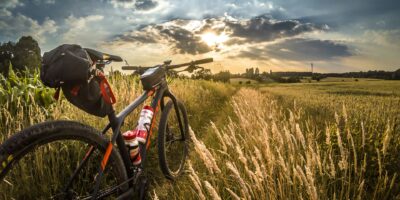
Scenario 1: Golden Hour Landscape
Winner: Sony A7 IV
When you have time to set up the shot, compose carefully, and shoot multiple exposures for HDR stacking, the Sony produces noticeably better results. The dynamic range advantage means you can recover detail in both the bright sky and dark foreground shadows.
Scenario 2: Quick Shot While Riding
Winner: iPhone 16 Pro
Pulling out a phone from your jersey pocket while rolling vs. stopping, dismounting, unpacking the camera from a frame bag, removing the lens cap, adjusting settings, shooting, repacking—the iPhone gets the shot before the moment disappears.
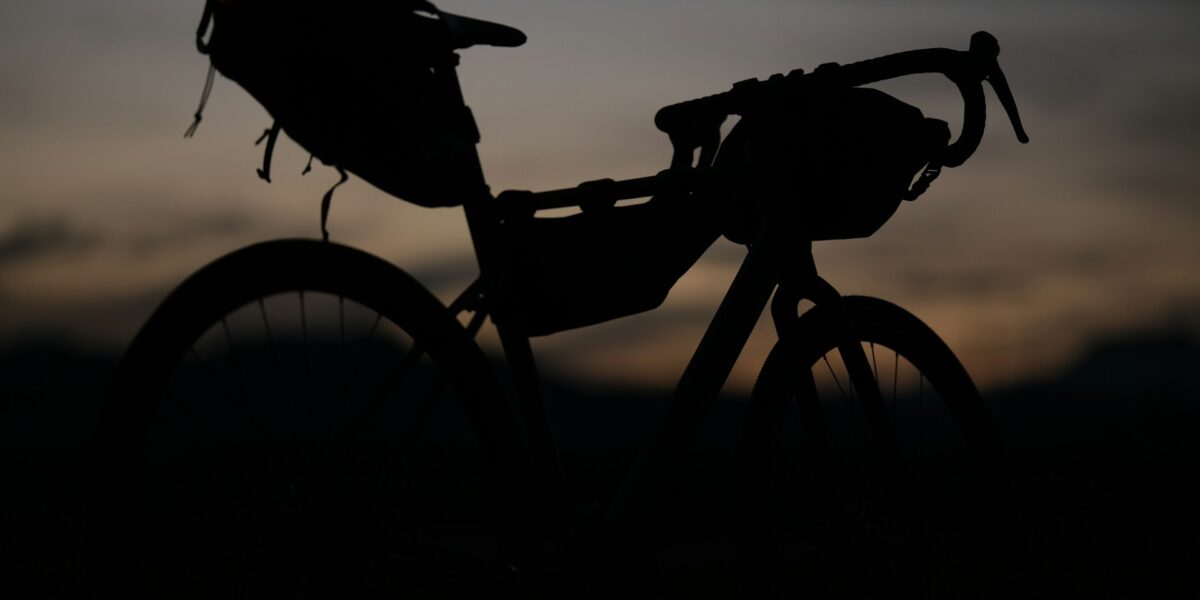
Scenario 3: Camp Night Photography
Winner: Sony A7 IV
Tent under stars, campfire portraits, Milky Way shots—the larger sensor and ability to shoot at f/1.4 with clean ISO 6400 makes the Sony essential for serious night photography.
Scenario 4: Rain and Dust Protection
Winner: Draw (with caveats)
The Sony A7 IV has weather sealing, but you still need to protect it from sustained rain and dust. The iPhone is IP68 water-resistant but the camera lenses can get permanently damaged by impact. Both require protective cases in bikepacking conditions.
Scenario 5: Battery Life on Multi-Day Trips
Winner: Sony A7 IV
The A7 IV gets approximately 520 shots per charge in real-world use. The iPhone’s battery drains from GPS, music, navigation apps, and photo editing apps—you’ll need a battery pack regardless.
The Decision Framework: Who Should Choose What
Choose the iPhone 16 Pro If:
- You’re primarily sharing on Instagram, Facebook, or other social media
- Your bikepacking routes are self-supported with no resupply access to charge gear
- Weight matters more than absolute image quality
- You value quick documentation over perfect composition
- You’re bikepacking solo and want one device for navigation, photos, and emergency communication
- You shoot more video than stills (iPhone’s stabilization is exceptional)
Choose the Sony A7 IV (or A7 V) If:
- You’re shooting for print publication or large-format displays
- Night photography and astrophotography are priorities
- You have room in your bikepacking setup for dedicated camera gear
- You’re doing supported rides with vehicle access for charging
- You want maximum editing flexibility in post-processing
- Photography is a primary purpose of the trip, not just documentation
The Hybrid Approach: What We Actually Recommend
Here’s the strategy most experienced bikepacking photographers use:
Bring the iPhone 16 Pro + one prime lens Sony setup
- iPhone 16 Pro for riding shots, quick moments, and sharing
- Sony A7 IV with a single 35mm f/1.4 prime lens (570g total)
- Leave the zoom lens at home
This gives you:
- iPhone for 90% of shots
- Sony for the 10% that really matter (sunsets, night shots, landscapes worth printing)
- Total camera weight: 1.3 lbs instead of 2.9 lbs
Real-World Recommendations by Trip Type
Weekend Bikepacking Trip (2-3 days)
iPhone only. You won’t have time to set up serious photography anyway.
Week-Long Expedition (7-10 days)
iPhone + Sony with prime lens. Worth the extra weight for standout shots.
Multi-Week Adventure (14+ days)
iPhone only. Charging logistics and weight accumulation make the Sony impractical.
Photography-Focused Bikepacking
Sony A7 IV with 2 lenses. If photos are the point, bring the gear you need.
The Uncomfortable Conclusion
Professional photographers are increasingly choosing the iPhone for travel and street photography over compact cameras. For bikepacking specifically, the iPhone 16 Pro delivers 80% of the image quality at 35% of the weight.
Unless you’re shooting for publication, printing large format, or doing serious astrophotography, the Sony’s advantages don’t justify the weight penalty on a bikepacking trip.
The best camera is the one you’ll actually use. And when you’re exhausted after 80 miles of climbing, the iPhone in your pocket will always get used more than the Sony buried in your frame bag.
The debate isn’t really iPhone vs Sony. It’s convenience vs. perfection. And on a bikepacking route, convenience wins almost every time.