Presta Valve vs Schrader Valve — Which Is Better for Your Bike?
The presta valve vs schrader valve debate has derailed more first-time bike shop conversations than probably any other piece of trivia-level hardware. You show up asking about a pump, and suddenly someone’s explaining valve stems like it’s a graduate seminar. I’ve been there. After years of riding everything from a beat-up 90s Trek commuter to a carbon road bike I absolutely did not need, I’ve used both valve types extensively — and I’ve made expensive mistakes with each of them. Here’s what actually matters.
The Core Difference in 30 Seconds
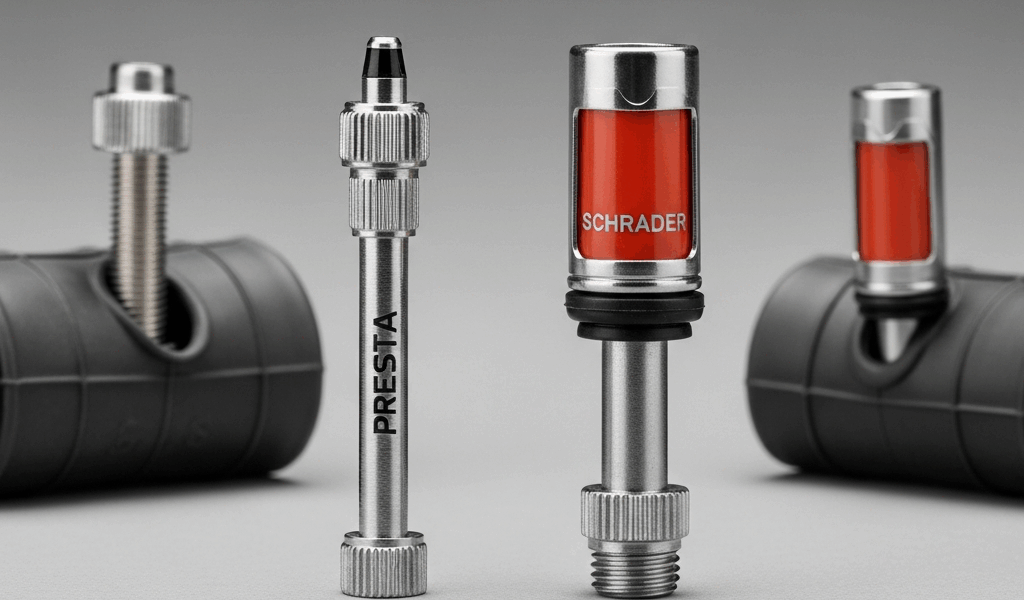
Presta valves are skinny. Schrader valves are fat. That’s the beginning and end of the visual difference.
More precisely — presta valves are 6mm in diameter, while schrader valves are 8mm. That extra 2mm sounds trivial until you’re staring at a rim drilled for one type and trying to fit the other. Presta valves have a threaded exterior with a small brass locknut on top that you unscrew manually before inflating. No spring mechanism inside. Schrader valves use a spring-loaded pin — the same design you’ll find on car tires, which is exactly why every gas station air compressor in the world is set up for them.
Presta valves handle higher pressures more reliably. Road bike tires routinely run at 90–130 PSI, and the presta design holds that pressure without the spring working against you during inflation. Schrader valves top out comfortably around 65 PSI for most applications, which is fine for mountain bikes and commuters but undersized for road cycling demands.
One practical hassle with presta valves — they require either a presta-specific pump head or a small adapter (usually $1–3 at any bike shop) to work with standard pumps. I’ve forgotten that adapter on more rides than I’d like to admit. Left stranded once in a suburb of Columbus with a slow leak and a gas station Schrader pump completely useless in my hand. Learned that lesson the hard way.
- Presta — 6mm diameter, no spring, threaded locknut, higher pressure capacity
- Schrader — 8mm diameter, spring-loaded pin, compatible with car/gas station pumps
- Presta adapters are cheap but easy to lose or forget
- Most floor pumps sold at bike shops today support both, often with a reversible head
When Presta Is the Right Choice
Probably should have opened with this section, honestly — because for a large percentage of cyclists reading this, the choice has already been made by your rim manufacturer and you’re just trying to understand why.
Presta valves are the standard on road bikes, cyclocross bikes, and most gravel bikes. If you’re running 700c wheels with a narrow rim profile — say, a rim width under 25mm — the smaller 6mm presta drilling is structurally better for the rim. Drilling a wider 8mm schrader hole into a narrow carbon or alloy rim removes more material and can compromise the rim’s integrity at high pressure. On a Zipp 303 or a Hunt 36 Carbon Spoke, you want the smaller hole.
High-Pressure Road Riding
Road cyclists running 25mm tires typically inflate to 85–100 PSI. Narrower 23mm setups used to run at 110–130 PSI regularly. The presta valve’s locknut design — where you physically open the valve by loosening a small brass nut — means there’s no spring resistance fighting you during inflation. Getting to 110 PSI with a schrader valve requires more pump effort and risks the spring not sealing cleanly under extreme pressure.
Brands like Vittoria, Continental, and Schwalbe all include presta valves as standard on their road tubes. The Vittoria Latex 700×25 tube, for example, comes with a 48mm presta valve stem specifically to clear deep-section aero rims. You can get 60mm and 80mm stem lengths for rims like the Zipp 404 (58mm deep) where a short valve stem won’t even reach the pump head.
Weight Weenies and Wheel Weight
Grams matter less than most cyclists think — but on rotating weight they matter slightly more than on static weight. A presta valve tube is marginally lighter than a comparable schrader tube. We’re talking 5–10 grams per tube. Multiply that across a full wheelset and it’s still not life-changing, but for riders already obsessing over spoke counts and rim depth, every gram is part of the conversation.
Tubeless Road Setups
Tubeless valves are a separate purchase from tubes, and the vast majority of tubeless road valves are presta-threaded — they’re designed to screw through the rim bed and seal against it. Stan’s NoTubes, Silca, and Enve all make alloy presta tubeless valves ranging from about $8 to $25 per pair. The schrader tubeless market exists but is far smaller and mostly oriented toward mountain biking, which leads us to the other side of this conversation.
When Schrader Makes More Sense
Frustrated by a presta adapter falling into a storm drain mid-ride, I started keeping a backup zip-tied to my saddle bag. That’s a perfectly reasonable workaround — but it also illustrates why schrader valves are genuinely superior for certain riding contexts.
Mountain Biking
Most 29er and 27.5″ mountain bike rims are wide enough — typically 30mm internal width or more — that the larger 8mm schrader drilling poses no structural concern. Mountain bike tires run at dramatically lower pressures. Cross-country riders typically run 20–30 PSI in tubeless setups. Trail riders go lower, sometimes 18–22 PSI. Enduro riders can dip below 20 PSI in the rear. At these pressures, schrader’s spring mechanism is a non-issue.
The durability advantage matters here. Schrader valves have a recessed pin and a protective cap over a robust spring-loaded core. Trail riding means mud, debris, and impact. A presta valve’s exposed brass locknut can get bent or damaged on a rock strike in a way that leaves you unable to get a pump head on it cleanly. Schrader valves shrug that off.
Brands like RockShox even build schrader valve compatibility directly into their suspension forks and rear shocks for tire pressure gauge cross-use. The Fox Transfer dropper post service kit uses the same schrader core. There’s an ecosystem coherence to schrader in mountain biking that’s genuinely practical.
Commuters and Casual Riders
Stopped at a gas station, dropped two quarters, inflated both tires in 90 seconds. That’s the schrader experience. For commuters riding hybrid bikes, cruisers, or city bikes with 35–45mm tires at 50–70 PSI, the convenience of gas station compatibility is real and recurring.
The Topeak Joe Blow Sport III floor pump handles both valve types and retails around $55 — but not everyone has that pump at home. Not everyone wants to carry a pump at all. Schrader valves let you stop anywhere. That accessibility matters for people who don’t want cycling to require a support infrastructure.
Kids’ bikes, e-bikes, and cargo bikes almost universally use schrader valves. Schwalbe’s Big Apple tire in 26×2.35″, a common cargo bike and comfort cruiser tire, ships standard with schrader tubes. Makes sense — the riders aren’t chasing grams, they’re chasing convenience.
Touring and Loaded Riding
Bicycle tourers crossing rural areas in developing countries swear by schrader valves. Moto shops, car garages, and roadside air stations worldwide are built around schrader. A Surly Long Haul Trucker with schrader tubes can get inflated in a town with no bike shop as long as there’s a vehicle repair business within walking distance. That’s not a trivial advantage when you’re 60 miles from the nearest city.
Can You Switch Between Them?
The short answer — sometimes, and it depends on which direction you’re converting.
Rim Drilling and Why It Limits Your Options
Your rim is drilled at the factory for one valve diameter. Going from schrader to presta is easy — a 6mm presta valve sits fine in an 8mm schrader hole. You’ll want a rubber grommet or valve hole adapter (roughly $2–5, available from Jenson USA or your local shop) to fill the gap so the valve doesn’t rattle and the rim tape isn’t compromised. Works fine. Costs almost nothing.
Going from presta to schrader is the problem. You cannot fit an 8mm schrader valve into a 6mm presta hole without drilling the rim. Drilling a rim yourself is possible with a step drill bit — a 21/64″ bit does the job on alloy rims — but it voids any warranty, removes material from a structural component, and isn’t advisable on carbon rims under any circumstances. I tried it once on an old alloy training wheel. It worked, but I wouldn’t recommend it without a drill press and some experience with metal work.
Adapters — What They Actually Cost and Do
Presta-to-schrader adapters are small brass fittings that thread onto a presta valve and give it a schrader-compatible exterior. They retail for $1–3 individually or $5–8 for a 4-pack on Amazon. The Lezyne-branded version is slightly more robust and runs about $4 each. These let you use a schrader pump or gas station air on a presta-equipped bike.
They work. They’re also tiny and disappear constantly. Keep two in your saddle bag and one in your kit pocket. Treat them like you’d treat a spare derailleur hanger — replaceable but worth having multiples of.
Going the other direction — using a presta pump head on a schrader valve — isn’t really a thing. The geometry doesn’t allow it without a proper reversible pump head.
What Tubeless Conversion Changes
Tubeless valves are purchased separately from tires and sealant, and you choose the valve type independently of anything else. Converting a rim from tubed to tubeless is a good moment to reassess valve choice. If your rim has a schrader hole and you’re setting up tubeless, buy schrader tubeless valves — the Stan’s schrader tubeless valve two-pack runs about $14. If you want to run presta in a schrader-drilled rim, buy presta valves with a grommet and add a small rubber washer to fill the gap.
Tubeless setups also mean valve core maintenance. Both presta and schrader tubeless valves have removable cores — a Presta valve core tool (around $6 from Genuine Innovations) or a standard schrader core tool handles this. Sealant gunks up valve cores over time and you’ll need to clear them. Neither type is meaningfully harder to maintain than the other here.
The Bottom Line — Match the Valve to the Bike
Road bike, gravel bike, or any bike where you’re running above 80 PSI or chasing minimal weight — presta is the right call and it’s probably already what your rims require. Mountain bike, commuter, touring bike, or any situation where gas station access and bulletproof convenience outweigh marginal performance gains — schrader is the practical choice. Buy a quality floor pump that handles both, keep a few presta adapters on hand regardless of what you’re riding, and stop losing sleep over this particular debate. Both valve types have been working reliably for decades. The valve isn’t slowing you down. The miles are waiting.




Stay in the loop
Get the latest adventure cycling world updates delivered to your inbox.