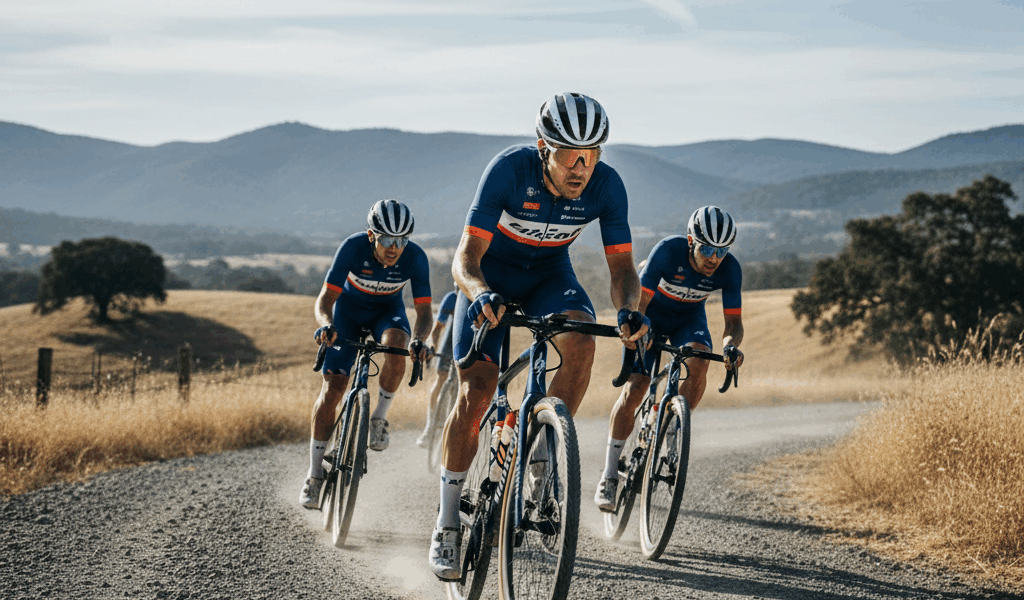
The professional cycling world is experiencing a seismic shift as elite road racers increasingly turn their attention to gravel racing. What started as a niche discipline has exploded into a legitimate career path, and the question is no longer if a gravel world tour will happen—but when.
The Migration from Road to Gravel
WorldTour teams are already adapting their equipment for gravel-style racing. Bahrain Victorious riders now have access to Bianchi’s Impulso gravel race bike as part of their complete equipment range. More telling is the adoption of SRAM’s 1×13 speed Red XPLR AXS groupset—originally designed for gravel—by road teams competing in classics races like Paris-Roubaix and Strade Bianche.
This technological crossover reveals something important: the lines between road racing and gravel racing are blurring. When WorldTour teams use gravel-specific drivetrains for their rear derailleur strength and increased chain retention on rough terrain, they’re acknowledging that gravel racing demands have infiltrated professional road cycling.
Why Pro Cyclists Are Making the Switch
Several factors are driving professional cyclists toward gravel:
Financial Opportunity
Prize purses at major gravel events now rival many pro road races. The Unbound Gravel 200 offers $25,000 to winners, while gravel-specific sponsorships from brands like SRAM, Specialized, and Canyon have created lucrative opportunities outside the traditional WorldTour structure.
Career Longevity
Road racing careers typically peak in a cyclist’s late 20s to early 30s. Gravel racing offers veteran riders a second career phase where experience, pacing strategy, and bike handling matter as much as pure watts—skills that don’t diminish with age.
Calendar Flexibility
The 2026 UCI WorldTour calendar features 36 races across 13 countries, creating a grueling 10-month season. Gravel racing offers a more manageable schedule with major events concentrated in spring and fall, allowing better work-life balance.
The Path to a Gravel World Tour
Several elements are falling into place that make a formalized gravel world tour inevitable:
Established Event Series
The Life Time Grand Prix already functions as a de facto gravel series, with six marquee events throughout the season and a $250,000 prize pool. Belgian Waffle Ride, Unbound Gravel, SBT GRVL, and Leadville Trail 100 MTB form a natural progression that could easily be formalized into a sanctioned series.
Broadcast and Media Coverage
Major gravel events now receive live streaming coverage with production quality approaching traditional road races. FloBikes and other platforms have demonstrated that gravel racing attracts substantial viewership, particularly among the 25-45 demographic that advertisers covet.
UCI Interest
While the UCI has been slow to embrace gravel, they’ve taken notice of the discipline’s growth. Gravel racing fills a competitive gap between road cycling and mountain biking, and the governing body will eventually want to bring this under their regulatory umbrella—much as they did with cyclocross decades ago.
What a Gravel World Tour Might Look Like
A formalized gravel world tour would likely include:
- 8-12 flagship events across North America, Europe, and Australia
- Standardized distance categories—likely 100km, 150km, and 200km options
- Points-based rankings similar to the WorldTour system
- Team classifications as gravel-specific trade teams solidify
- Minimum prize requirements to ensure financial viability for professional athletes
Obstacles and Challenges
Despite the momentum, several hurdles remain:
Course Standardization
Part of gravel racing’s appeal is its unpredictability—changing terrain, weather-dependent conditions, and unique local character. Over-regulation could sterilize what makes gravel special.
Equipment Regulations
Unlike road racing with its clearly defined equipment rules, gravel exists in a gray area. Bikes range from barely modified road machines to pseudo-mountain bikes. Any world tour would need to establish equipment parameters without stifling innovation.
Sustainability Concerns
Many gravel events use rural roads and trails that may not withstand the impact of expanded professional racing with increased participant numbers and support vehicles.
The Timeline
Industry insiders predict we’ll see a formalized gravel world tour within 3-5 years. The infrastructure already exists. The athlete interest is proven. The sponsorship money is flowing. What’s needed now is organizational will and stakeholder alignment.
For professional cyclists sitting on the fence, the message is clear: gravel racing isn’t a temporary trend or off-season distraction. It’s a parallel career path with room for growth, and those who establish themselves now will have first-mover advantage when the inevitable world tour structure arrives.
What This Means for Adventure Cyclists
The professionalization of gravel racing will likely mirror what happened to cyclocross—increased visibility, better bikes at consumer price points, and more participants overall. But it may also mean more crowded start lines at your favorite local gravel event as the sport’s popularity continues to surge.
The gravel world tour is coming. The only question is whether you’ll be ready to ride when it arrives.