The Tire That Lasted 8,000 Miles: What Thru-Cyclists Actually Run
Touring tire choices have gotten complicated with all the new options and conflicting reviews flying around. As someone who’s ridden over 12,000 miles loaded and interviewed dozens of cyclists who’ve done the same, I learned everything there is to know about what rubber actually survives long-haul touring. Today, I will share it all with you.
Here’s the thing nobody tells you upfront: when your entire life fits on a bicycle and the nearest bike shop is 200 miles away, tire choice stops being a preference. It becomes a survival decision. I found that out the hard way on a remote stretch in Patagonia with my second flat in three hours.
Why Touring Tire Selection Differs From Regular Cycling
Weekend warriors optimize for speed, weight, or grip on roads they know. Touring cyclists? Completely different calculus. I had to unlearn a lot of what I thought I knew about tires when I started loading up a bike for months at a time.
Reliability trumps performance every single time. A flat tire in a remote area doesn’t just mean lost time — it can mean genuine danger and burned-through repair supplies. I’ve watched riders burn through their entire patch kit in a single bad day because they chose fast tires over tough ones. Touring tires need to prioritize puncture resistance, full stop.
Longevity beats weight savings. Saving 100 grams per tire means absolutely nothing if you’re replacing them every 2,000 miles. When you’re hauling 40 pounds of gear across continents, heavier and more durable just makes more sense. I learned to stop caring about the scale and start caring about the mileage.
Versatility over specialization. Tours cross pavement, gravel, dirt, and everything in between — sometimes in the same afternoon. Your tires need to handle all of it without you swapping rubber at every surface change.
The Tires That Actually Last: Field-Tested Options
Probably should have led with this section, honestly. These are the tires I’ve either run myself or seen on bikes that’ve crossed continents.
Schwalbe Marathon Plus: The default for a reason, and I don’t say that lightly. These tires pack a 5mm SmartGuard puncture protection layer that stops glass, thorns, and most of the sharp debris you’ll roll over. I’ve talked to riders who got 8,000 to 10,000 miles out of a set. The trade-off is real though — they’re heavy at 760g for 700x35c and the rolling resistance is noticeably higher than performance rubber. For loaded touring? That matters way less than you’d think. I ran these across Eastern Europe and didn’t flat once in 3,000 miles.
Continental Contact Plus: Continental’s answer to the Marathon Plus. Their SafetySystem Breaker layer gives you similar durability with slightly better road feel. Some riders I’ve toured with actually prefer how Continentals ride while getting comparable puncture protection. Expect somewhere between 6,000 and 8,000 miles depending on what surfaces you’re hitting.
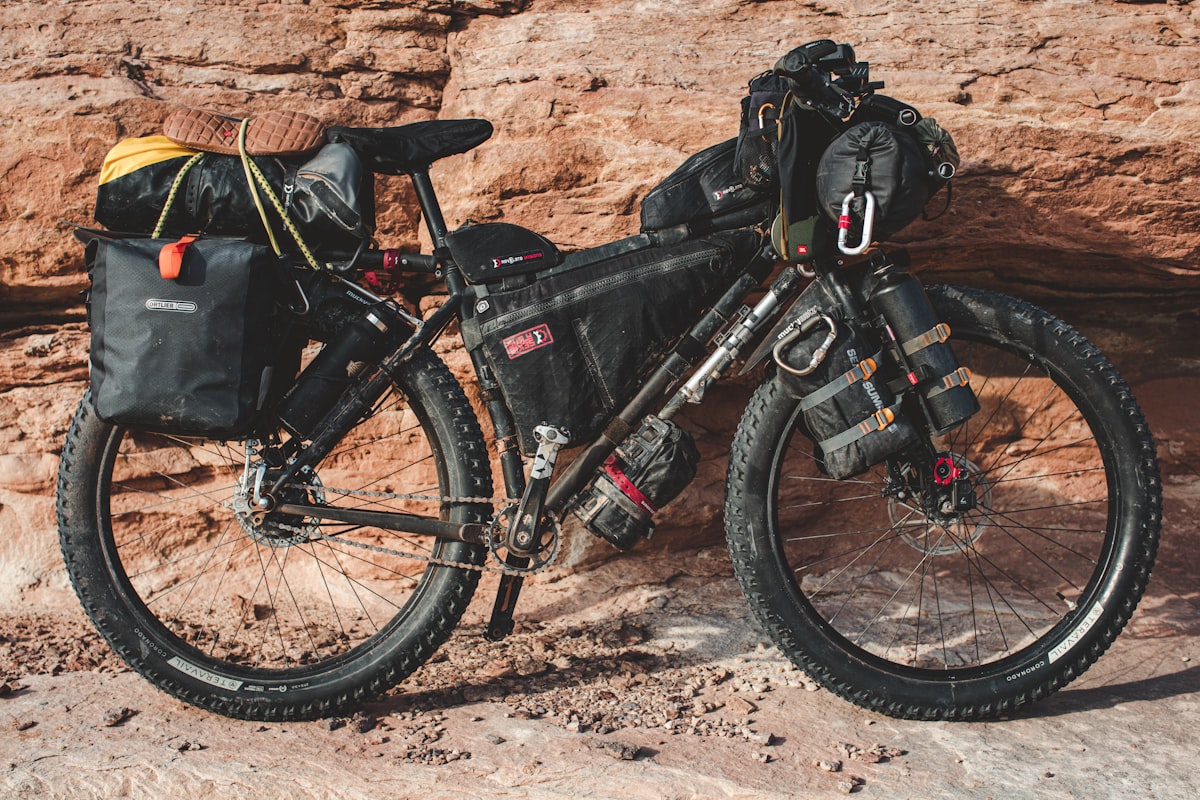
Schwalbe Marathon Mondial: The expedition specialist, and the tire I’d grab for anything involving rough conditions. Reinforced sidewalls and a tread pattern that actually grips on dirt roads. It’s less efficient on pavement than the standard Marathon Plus, but when the pavement ends — and it will — you’ll be glad you have them. Really popular among riders crossing developing countries or tackling off-road sections.
Panaracer Pasela PT: A lighter alternative for riders who value ride quality and are willing to accept more flats for it. The ProTite belt gives you moderate puncture protection at roughly half the weight of Marathon Plus tires. You’ll get 3,000 to 5,000 miles depending on conditions. I ran these on a short European tour once and loved the ride feel, but I wouldn’t take them somewhere remote.
Width Selection: The 35mm Sweet Spot
Tire width is one of those debates that never ends in cycling forums, but for touring it’s actually pretty straightforward once you understand the tradeoffs.
Narrower (28-32mm): Lower rolling resistance on smooth pavement, lighter weight, fits more frames. But you’re running higher pressures, amplifying every bump and crack, and giving up traction on loose surfaces. Fine for smooth European bike paths. Not great for much else when loaded.
Wider (35-42mm): You can run lower pressure, which actually reduces puncture risk and massively improves comfort. Better traction on gravel and dirt. Absorbs road chatter on rough pavement. They’re heavier, sure, but research actually suggests the rolling resistance gap closes at the lower pressures wider tires allow.
Most experienced touring cyclists I know have settled somewhere between 32mm and 38mm. The 35mm width fits most frames while nailing that balance of efficiency, comfort, and versatility. Heading into rough territory? Go wider. Sticking to smooth European routes? You can get away with narrower. But 35mm is the answer for most people, most of the time.
Pressure Management for Loaded Bikes
Getting your pressure right matters more than most riders realize. Here’s how I think about it:
The baseline: Touring tires at 35mm width typically want 60-75 PSI for a loaded setup. Wider tires run lower; narrower run higher. Pretty simple starting point.
Adjust for the surface: On rough roads, I’ll drop 10-15 PSI from my baseline. Let the tire absorb the impacts instead of hammering the rim. On smooth pavement, pump it back up for better efficiency. I adjust almost daily depending on what’s ahead.
Factor in weight: This one’s obvious but people forget it. A 200-pound rider carrying 50 pounds of gear needs meaningfully more pressure than a 150-pound rider with 30 pounds. Run the numbers for your setup, not someone else’s.
Check constantly: I check pressure every two to three days minimum. Slow leaks, temperature swings, altitude changes — they all mess with your pressure more than you’d expect. And carry a real gauge, not just whatever’s built into your pump. Those pump gauges are notoriously inaccurate.
Dealing with Flats in the Field
Even the toughest tires eventually flat. What separates a minor annoyance from a trip-ending disaster is preparation. Here’s what I’ve learned the hard way:
Carry more than you think you need: Minimum two spare tubes, three patches, tire levers, and a pump that can actually reach full pressure. For remote touring, throw in a tire boot (or a folded dollar bill works in a pinch), needle and thread for sidewall repair, and seriously consider packing a spare foldable tire. I’ve been saved by that spare tire twice now.
Find the cause before you fix anything: When you flat, resist the urge to just slap in a new tube. Run your finger carefully inside the tire and find whatever punctured you. A tiny piece of glass or a thorn that’s still embedded will just kill your next tube too. I’ve watched experienced riders make this mistake and flat again within five miles.
Patch properly or don’t bother: Clean the tube thoroughly, rough up the surface, apply glue, and then actually let it dry until it’s tacky — not wet, tacky. Press the patch on firmly. Most failed patches happen because someone rushed the drying step. Take the extra two minutes. It’s worth it.
Replace tires before they blow: Check your tread regularly. When the wear indicators show or you can see the casing threads, it’s time. Better to swap tires in a city with a bike shop than to field-repair a blown sidewall in the middle of nowhere. Trust me on this one.
Specific Recommendations by Tour Type
Developed world road touring (US, Europe, Australia): Schwalbe Marathon Plus or Continental Contact Plus in 32-35mm. The infrastructure’s good enough that you don’t need absolute maximum durability, and rolling efficiency matters when you’re putting in long days on pavement.
Developing world road touring: Schwalbe Marathon Mondial or Marathon Plus in 35-40mm. Rougher surfaces, variable road quality, and limited parts availability all point toward the heaviest-duty option you can get. This isn’t the place to save weight on tires.
Mixed-surface touring: Marathon Mondial in 38-42mm, or dedicated gravel tires like WTB Byway if you’re mostly off-pavement. Tread pattern starts mattering a lot more when dirt and gravel dominate your route.
Ultralight credit card touring: Panaracer Pasela or a similar lightweight puncture-resistant tire. You’ve got minimal gear, short distances between services, and the weight savings and ride quality genuinely justify accepting higher flat risk.
The Bottom Line
That’s what makes tire selection endearing to us long-distance cyclists — it’s one of those decisions that seems small but shapes your entire experience. The Schwalbe Marathon Plus dominates thru-cycling for a reason: fewer flats, longer life, and dependable performance mile after mile after mile.
That extra 200 grams per tire and the slightly sluggish rolling resistance? They matter infinitely less than not being stranded on a remote highway patching your third flat of the day. Pick tires that let you think about the journey instead of the equipment. Your future self, standing on some gorgeous overlook instead of squatting roadside with a patch kit, will thank you.