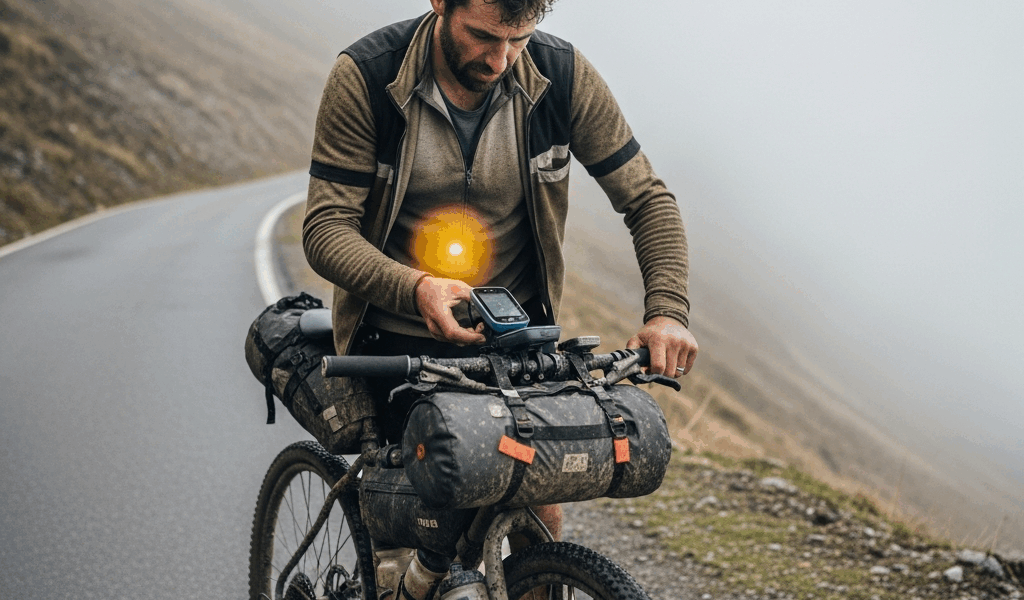
You just wrapped up an FTP test, your power meter reads 210 watts, and now you’re wondering what that number actually tells you. Here’s the thing — raw watts by themselves don’t mean much. A 210-watt FTP from a 70kg rider and a 90kg rider represent completely different abilities on a climb. Watts per kilogram is the number that matters.
What W/kg Means and How to Calculate Yours
Take your FTP (Functional Threshold Power) in watts. Divide by your body weight in kilograms. Done. A 200-watt FTP at 75kg gives you 2.67 W/kg. Most cycling apps calculate this for you the second you finish an FTP test — Zwift, TrainerRoad, Garmin Connect, they all spit out the number automatically.
The general ranges for unloaded road cycling:
1.0–2.0 W/kg — Beginner. You ride a few times a week, maybe commute. Hills are hard but manageable if you gear down and take it slow.
2.0–3.0 W/kg — Recreational rider. You can hang on group rides without getting dropped immediately, handle moderate climbs without stopping, and ride 50+ miles without bonking.
3.0–4.0 W/kg — Strong club rider. Competitive on local group rides, can push sustained climbs, probably race or have seriously thought about it.
4.0+ W/kg — Competitive racer. Cat 1–3 racers, serious amateurs, and those riders who float up climbs while everyone else is cross-eyed from the effort.
Those categories are for clean road bikes. The moment you strap 15kg of bikepacking gear to your frame, the math shifts in ways that can catch you off guard.
W/kg for Loaded Bikepacking vs Road Cycling
This is what TrainerRoad and most W/kg calculators leave out entirely: add 10–20kg of bikepacking gear to a 75kg rider and your effective W/kg drops 10–20%. That 3.0 W/kg rider on a clean road bike? Climbs like a 2.5–2.7 W/kg rider when fully loaded. Your legs haven’t gotten weaker — the denominator just got bigger.
This explains something that confuses a lot of first-time bikepackers. You crush your local hills every weekend, but a loaded mountain pass absolutely buries you. The gap between 3.0 and 2.5 W/kg doesn’t sound dramatic on a spreadsheet. On a 2,000-foot climb, it’s the difference between grinding up in 45 minutes and walking your bike the last quarter mile because your legs are cooked.
Quick math for loaded riding: take your W/kg and subtract 0.3–0.5. That’s your loaded number. Use it — not your road number — when looking at route elevation profiles for bikepacking trips. When a route description says “moderate climbing,” whoever wrote that was on an unloaded bike.
What W/kg Do You Need for Common Bikepacking Routes?
Flat routes (Great Divide flat sections, ACA TransAm through Kansas): W/kg barely matters here. What matters is sustained power output and the ability to pace yourself over 8–10 hour days. A 1.5 W/kg rider can finish these routes — not fast, but comfortably.
Mountain routes (Sierra High Route, loaded alpine passes, Colorado Trail): You need 2.0+ loaded W/kg minimum to make reasonable progress each day. Below that threshold, you spend more time pushing your bike than riding it on sustained climbs, and your daily mileage drops low enough that resupply math starts getting uncomfortable.
Multi-day loaded climbing: Budget 500–700 meters of climbing per hour at your loaded W/kg. If a route throws 3,000 meters of climbing at you in a single day, that’s 4–6 hours of pure climbing at a loaded 2.5 W/kg. Add in flat sections, water stops, and the inevitable wrong turn, and you’re staring at a 10–12 hour day.
The honest take: most bikepacking routes don’t demand high W/kg. They demand consistency — sustainable effort over 6–10 hours, day after day. A rider sitting at 2.0 loaded W/kg who can ride all day will cover more ground than a 3.5 W/kg rider who blows up by early afternoon.
How to Improve W/kg for Bikepacking
W/kg moves in two directions: more watts or fewer kilograms. For bikepacking, the kilogram side has two levers — your body and your gear. And honestly, gear weight is almost always the easier win.
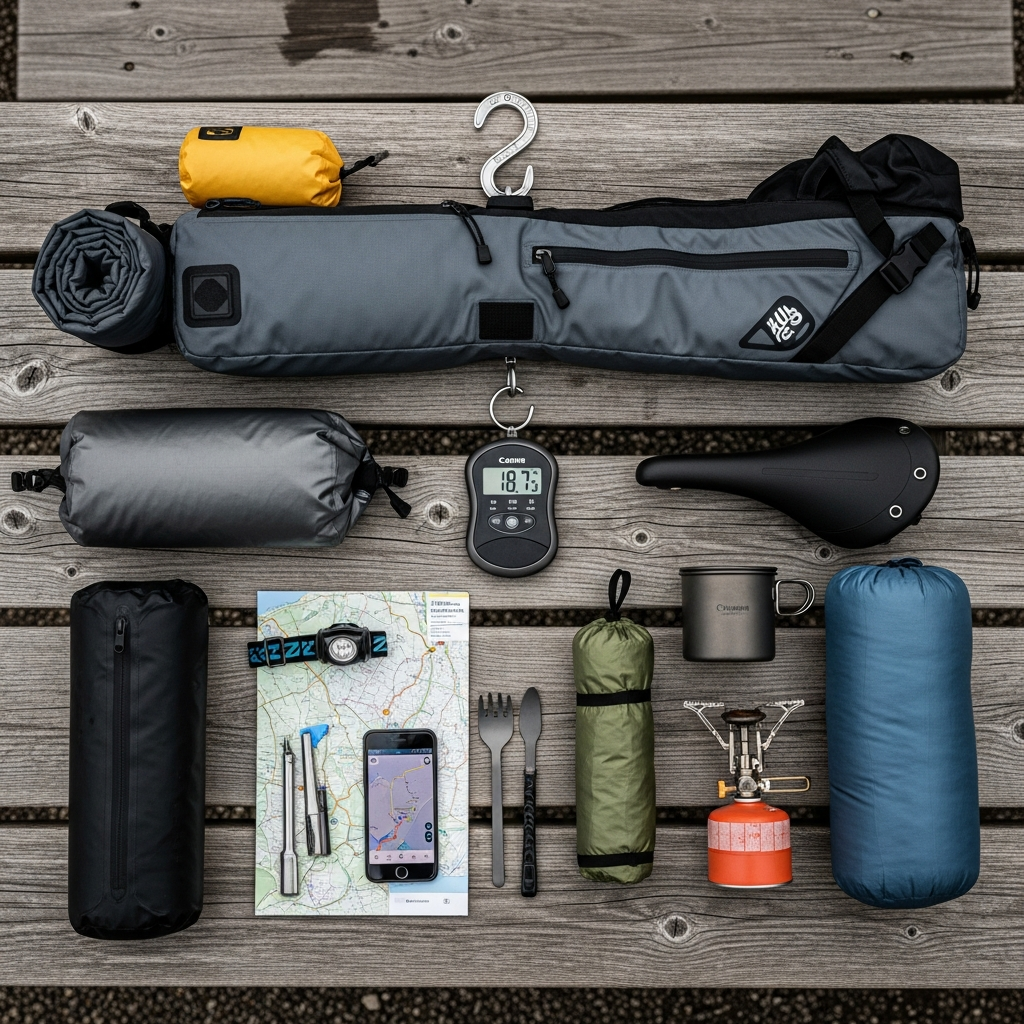
Dropping 3kg from your bikepacking kit gives you the same loaded W/kg improvement as a 6–8 week structured FTP training block. Swap that 2kg tent for a 900g tarp shelter. Ditch the steel cook set for titanium. Leave the camp chair behind. Those three swaps alone can save 2–3kg, and the improvement hits instantly — no intervals, no rest weeks, no ramp testing.
Training still matters, obviously. Sweet spot and threshold intervals build the sustained power that loaded climbing demands. But before committing to a 12-week training plan, pull out all your gear and weigh it. The fastest path to better loaded W/kg might be sitting in your garage right now, not waiting for you on the trainer.
Both sides count. A rider who trains religiously but carries 25kg of gear and a rider who packs 12kg but never trains — both will struggle on mountain routes. The real sweet spot is a solid fitness base paired with a ruthlessly edited gear list. That combination carries you further than either approach alone.

Stay in the loop
Get the latest adventure cycling world updates delivered to your inbox.