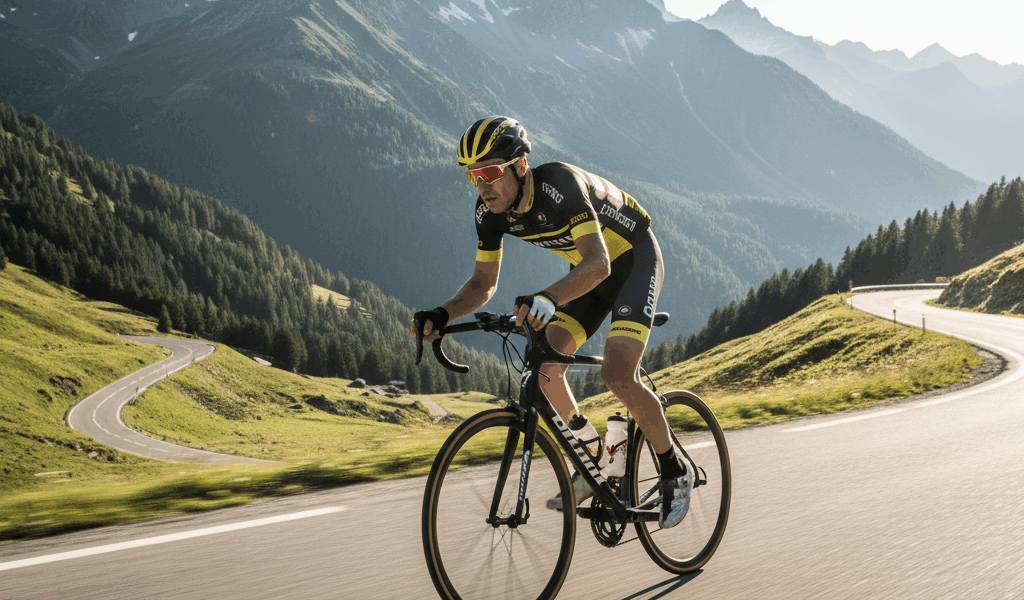
The Grand Départ kicks off July 4 in Barcelona. You can ride the best stages before the pros even arrive.
The 2026 Tour de France does something it hasn’t done since 1971: start with a team time trial. The location? Barcelona’s Olympic Stadium.
But here’s what matters to bikepackers: This year’s route is one of the most rideable in Tour history. From the Catalan coast through the Pyrenees to a double finish at Alpe d’Huez, you could spend two weeks hitting every major climb before the race even starts.
Here’s how to plan it.
The Barcelona Start: Stages 1-3
The Tour kicks off at Fòrum on Barcelona’s Mediterranean coast. Stage 1 is a team time trial finishing at Estadi Olímpic Lluís Companys—the 1992 Olympics focal point.
For bikepackers: Arrive early. Barcelona in late June is warm but not brutal. Ride the Montjuïc circuit that features in Stage 2—roughly 2,400 meters of climbing with stunning city views.
Stage 3 crosses into France via the Pyrenees. Nearly 4,000 meters of climbing. Col d’Aspin. Col du Tourmalet. Finish at Cirque de Gavarnie, one of the most dramatic natural amphitheaters in Europe.
This three-stage sequence alone makes for an incredible 4-5 day bikepacking route.
The Mountain Stages Worth Riding
The 2026 route includes 8 mountain stages with 5 summit finishes. Total elevation: 54,450 meters across 3,333 kilometers.
You don’t need to ride all of it. Focus on these:
Pyrenees (Week 1): Barcelona → Gavarnie. The Tourmalet is a bucket-list climb. Gavarnie is worth the extra day just for the scenery.
Massif Central: Le Lioran returns to the Tour. Less famous than Alpine climbs, but the roads are emptier and the villages are charming.
Vosges: Le Markstein delivers mountain views without Alpine intensity. Good for recovery legs between bigger stages.
The Double Alpe d’Huez Finish
This is the headline.
Stages 19 and 20 both finish at Alpe d’Huez. Back-to-back. It hasn’t happened before in Tour history.
Stage 19: Just 128 kilometers but designed for maximum suffering. Uphill start, ultralight stage, full gas to the summit.
Stage 20: The monster. 5,600 meters of climbing. Col de la Croix de Fer. Télégraphe. Galibier. Then up the Col de Sarenne—the back route to Alpe d’Huez.
For bikepackers, this two-day sequence is the trip. Plan 3-4 days if you want to recover between attempts.
Sample 14-Day Itinerary
Days 1-2: Fly into Barcelona. Ride the Montjuïc circuit. Rest.
Days 3-5: Barcelona to Gavarnie via Stage 3 route. Tourmalet summit. Camp at Cirque de Gavarnie.
Days 6-8: Transfer to Massif Central. Ride Le Lioran. Explore quieter roads.
Days 9-10: Vosges. Le Markstein. Recovery riding.
Days 11-14: Alps. Stage 19 and 20 routes. Double Alpe d’Huez attempt. Celebrate.
Logistics
When to go: Late May or early June beats the summer crowds. The race is July 4-26, so finish before the pros arrive or wait until August.
Weather: Alpine conditions vary wildly. Pack layers. Check col conditions before climbing—snow closures happen into June.
Accommodation: Mountain towns book fast near race dates. Reserve early or pack camping gear.
Bail-out options: SNCF trains cover most of the route. You can ship your bike if plans change.
The Bottom Line
The 2026 Tour de France might be the most bikepacker-friendly route in years. Barcelona start. Pyrenees in week one. Double Alpe d’Huez finish.
You don’t have to race it. But you can absolutely ride it.
Start planning now. The best accommodation books six months out.

Stay in the loop
Get the latest adventure cycling world updates delivered to your inbox.