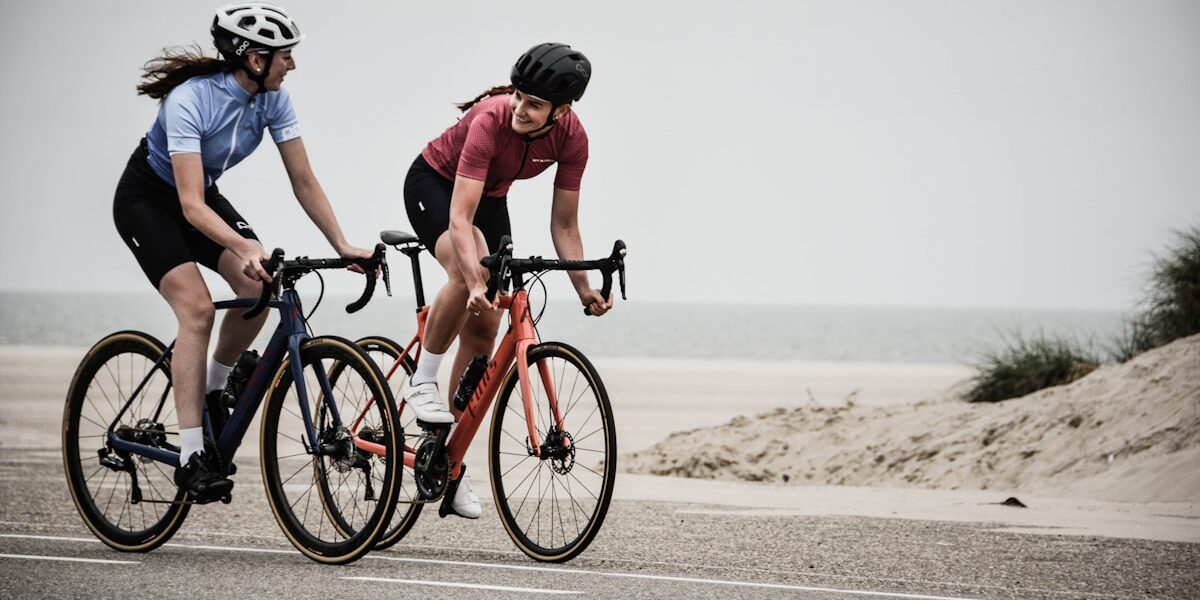
When it comes to cardiovascular exercise, the biking versus running debate seems to never end. I’ve done both extensively over the years, and honestly, the answer to “which is better” always comes down to what you’re trying to achieve. Both activities offer exceptional health benefits, but they differ significantly in calorie burn, joint impact, muscle engagement, and—maybe most importantly—how sustainable they are long-term.
Calorie Burn Comparison

The calorie burn question isn’t straightforward—it depends heavily on intensity, duration, and individual factors like weight and fitness level. I learned this when I switched from running to cycling and initially thought I wasn’t burning as many calories. Turns out I was just riding at the wrong intensity.
Running typically burns more calories per hour at equivalent effort levels:
- Running at 6 mph (10-minute mile): approximately 600-700 calories per hour
- Running at 8 mph (7.5-minute mile): approximately 800-1000 calories per hour
Cycling calorie burn varies more dramatically with intensity:
- Moderate cycling (12-14 mph): approximately 400-500 calories per hour
- Vigorous cycling (16-19 mph): approximately 600-750 calories per hour
- Racing or intense intervals (20+ mph): approximately 850-1000 calories per hour
However, here’s the key insight that changed my perspective: most people can sustain cycling for much longer than running. A two-hour bike ride is entirely reasonable for recreational cyclists, while a two-hour run requires significant training and recovery time. That’s what makes cycling so effective for total calorie expenditure—you can simply do it longer.
Joint Impact and Injury Risk
This is where cycling has a clear advantage, and honestly, it’s why I eventually shifted more of my training to the bike. Running is a high-impact activity where your joints absorb forces of 2-3 times your body weight with each stride. My knees started complaining after a few years of consistent running, and I wasn’t even doing crazy mileage. Over time, this repetitive impact can contribute to:
- Knee pain and runner’s knee (patellofemoral syndrome)
- Shin splints
- Plantar fasciitis
- Hip and ankle stress fractures
Cycling is virtually zero-impact. Your body weight is supported by the saddle, and the circular pedaling motion creates smooth, continuous movement without jarring forces. I wish I’d understood this earlier in my fitness journey. This makes cycling ideal for:
- People with existing joint issues or arthritis
- Those recovering from lower-body injuries
- Heavier individuals starting a fitness program
- Older athletes looking to maintain cardiovascular fitness
Muscle Engagement
Running engages:
- Quadriceps and hamstrings
- Glutes
- Calves and hip flexors
- Core muscles for stability
- Upper body for arm swing
Cycling primarily targets:
- Quadriceps (dominant during the power phase)
- Hamstrings and glutes (during the pull-up phase)
- Calves
- Core for stabilization
Running provides more full-body engagement, while cycling offers more focused lower-body development with the ability to build significant leg strength through resistance. Probably should have mentioned this earlier, but if you want truly strong legs, cycling with hill work will get you there faster than running will.
Practical Considerations
Time Efficiency
If you have limited time, running delivers more cardiovascular benefit per minute. A 30-minute run typically provides more training stimulus than 30 minutes of moderate cycling. That’s just the reality of the intensity difference.
Equipment and Cost
Running requires minimal equipment—just quality shoes replaced every 300-500 miles. Cycling involves a larger upfront investment (bike, helmet, maintenance) but lower ongoing costs if you maintain your equipment properly. I’ve found the bike pays for itself over time, but that initial investment can be a barrier.
Weather Dependency
Runners can operate in most conditions with appropriate clothing. Cycling becomes more challenging—and dangerous—in rain, ice, or extreme winds. However, indoor cycling on a trainer offers a year-round option. I actually learned to love trainer rides during winter months.
Mental Engagement
Cycling typically offers more variety—changing terrain, navigation decisions, and the ability to cover significant distances. Running can feel more meditative but may become monotonous for some athletes. That’s what makes cycling endearing to those of us who get bored easily.
The Best Choice for Different Goals
Choose running if you want to:
- Maximize calorie burn in minimum time
- Build bone density (impact loading strengthens bones)
- Train with minimal equipment
- Prepare for running-specific events
Choose cycling if you want to:
- Exercise with minimal joint stress
- Build leg strength and endurance
- Enjoy longer workout sessions
- Commute or run errands while exercising
- Continue training through injury recovery
The Cross-Training Advantage
The best approach for many athletes is incorporating both activities. Cycling serves as excellent cross-training for runners, providing cardiovascular maintenance without additional impact stress. Many elite runners include cycling in their recovery days, and for good reason—it works.
Similarly, runners who add cycling often find improved leg strength and cardiovascular capacity that translates back to faster running times. I’ve experienced this firsthand, and the carryover is real.
Bottom Line
Neither activity is universally “better”—the right choice depends on your goals, physical condition, and preferences. For pure calorie burn efficiency, running edges ahead. For sustainability, joint health, and the ability to exercise for longer durations, cycling wins. For optimal fitness and long-term adherence, consider doing both. My experience has taught me that variety keeps you healthy and engaged for the long haul.