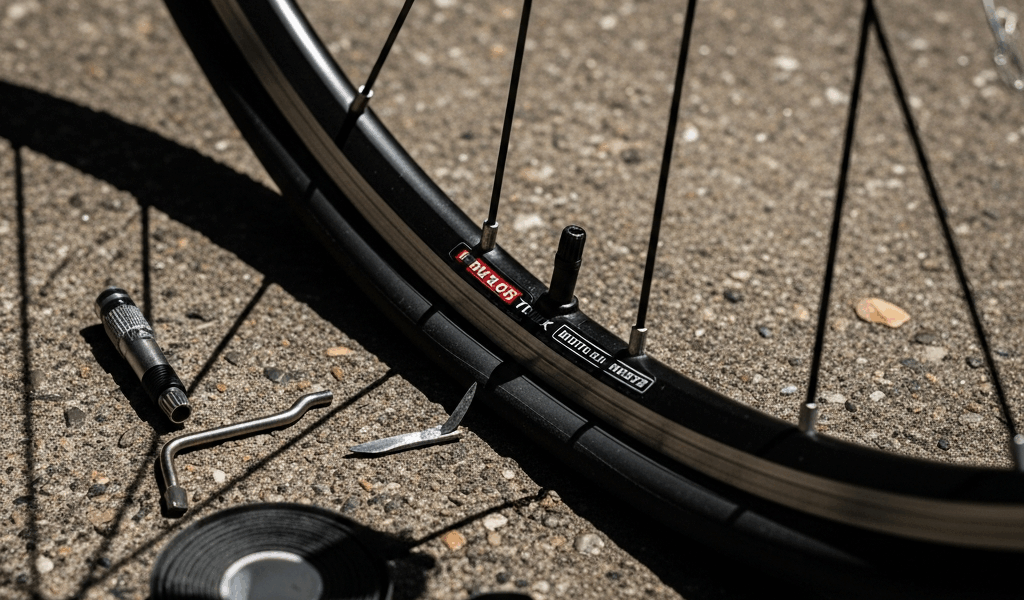
If your bike tire keeps going flat, do not install another tube until you find where the air escaped. The location and shape of the leak usually identify the cause: a single hole on the road-facing side points to debris, two parallel cuts suggest a pinch flat, a hole on the rim-facing side points to rim tape or a spoke, and damage beside the valve often means the tube moved or the valve was stressed.
A tire that slowly loses some pressure is not automatically punctured. Bicycle tubes naturally lose air over time, especially lightweight latex tubes and high-pressure tires. But a tire that becomes unrideable overnight, repeatedly fails in the same place, or loses pressure during every ride needs diagnosis.
This guide covers both inner-tube and tubeless systems. If the tire has a damaged bead, exposed casing cords, a bulge, a large cut, or cannot remain seated evenly on the rim, do not ride it. Replace the damaged component or have a bicycle mechanic inspect the wheel.
First, identify how fast the tire loses air
| What happens | Likely places to check |
|---|---|
| It loses a small amount over days or weeks | Normal air diffusion; tube material; check with an accurate gauge |
| It is soft or flat by morning | Small puncture, valve or removable valve core, tubeless sealant, tubeless tape or valve seal |
| It goes flat after a pothole or curb strike | Pinch flat, casing cut, bent or damaged rim |
| A replacement tube goes flat again | Debris still in the tire, damaged rim strip, exposed spoke hole, installation pinch, wrong tube or tire size |
| Tubeless tire leaks around spokes or the valve | Rim-tape or valve seal rather than the tread puncture |
| The tire bulges or the bead line is uneven | Stop inflating; deflate and correct the fit, or replace incompatible/damaged parts |
For a tire with an inner tube: locate the hole before replacing it
Remove the wheel only after noting the valve’s position relative to the tire. That reference helps you match a hole in the tube to the same location in the tire or rim. Fully deflate the tube, remove one tire bead and take out the tube without losing that orientation.
- Add just enough air for the tube to take shape.
- Listen and feel for escaping air. If the leak remains elusive, submerge sections of the tube in water and look for bubbles.
- Mark the hole.
- Lay the tube beside the wheel in its installed orientation. Check the corresponding area of the tire and rim.
This is the essential step that prevents repeat flats. Park Tool’s tire-and-tube service procedure likewise recommends inspecting the tube, tire and rim to identify the original cause.
One small hole on the outside of the tube
A single puncture on the tread-facing side commonly comes from glass, wire, a thorn or a small nail. Flex the tread near the matching location and inspect both the outside and inside of the casing under good light. Remove the object before installing a patched or replacement tube.
Use a cloth to wipe the inside of the tire, then feel cautiously for anything protruding. Do not sweep a bare finger rapidly through the casing; sharp glass or wire can cut it. Check the entire circumference because more than one object may be present.
Two short, parallel cuts
Paired cuts—the classic “snakebite”—usually mean the tube was pinched between the rim and an obstacle. This can happen when pressure is too low for the tire width, rider and luggage load, but it can also follow a hard impact. Inspect the tire casing and rim for damage before fitting another tube.
Do not use generic pressure advice such as “road tires need 100 PSI.” The correct pressure depends on tire size, system, total load and the limits of both tire and rim. Use a gauge and follow the tire and wheel manufacturers’ compatible range, never exceeding the lower stated maximum. Schwalbe’s pressure guidance specifically notes that one universal recommendation is not possible.
A hole on the rim-facing side
A puncture facing inward usually directs attention to the rim. Inspect the rim strip or tape for a tear, an exposed spoke hole, a protruding spoke or a sharp edge. Tube-type rim strips must be centered and wide enough to protect the tube without interfering with the tire bead.
Use rim strip or tape intended for the wheel and installation type. Tubeless tape has a different job: it must make the rim bed airtight and remain compatible with sealant. Ordinary household tape is not a safe substitute.
A cut or tear beside the valve
Damage where the valve joins the tube can result from a crooked valve, tube movement or riding underinflated. Check that the tube is the correct size and that the valve exits the rim straight toward the hub. A tube torn at its valve base should be replaced rather than patched.
If bubbles form at the valve opening, the valve core may be loose or damaged. Only some Presta cores are removable; Schrader cores are removable. Use the correct valve-core tool and follow the tube or valve manufacturer’s instructions. Do not twist the entire valve stem, and do not confuse the small Presta tip—which opens counterclockwise and closes clockwise—with a removable core.
Check the tire casing, bead and rim before reinflating
Replace a tire with a damaged bead, a bulge, exposed casing threads, extensive cracking or a cut that allows the tube to push through. A tire boot can temporarily support some tread or sidewall cuts in a tube-type setup, but it is an emergency measure to get off the road—not a restoration of the tire’s original strength.
Inspect the rim for cracks, dents, sharp edges and deformation. A visibly damaged carbon rim, a bead-seat defect or a rim that will not retain the tire evenly warrants professional inspection. Tire, rim and tube sizes must be compatible; the diameter standard is not interchangeable merely because two labels look close.
During installation, add only enough air for the tube to hold its shape and make sure it is not trapped under the bead. Inflate to low pressure first. On both sides of the wheel, verify that the tire’s molded bead-reference line remains evenly spaced above the rim. If the tube protrudes or the tire bulges, deflate immediately. Never exceed either component’s maximum pressure in an attempt to force the bead into place.
If the tubeless tire keeps losing air
A tubeless system needs compatible tire and rim components, an airtight rim bed, a sealing valve and active sealant. Troubleshoot it separately from an inner-tube system.
- Find the leak. Apply soapy water around the tread, bead and valve. Bubbles at spoke holes can indicate that air entered the rim cavity through failed tape.
- Check sealant. Sealant dries over time, with service life affected by product, temperature and conditions. Inspect it according to the sealant maker’s interval rather than assuming the tire still contains active liquid.
- Check the valve. Confirm the valve is seated correctly and the retaining nut is hand-secure. A clogged, loose or damaged replaceable core may need cleaning, tightening or replacement.
- Inspect the tubeless tape. Look for lifting, cuts, wrinkles or gaps. Use tape of the type and width required by the rim manufacturer.
- Inspect the puncture and casing. Small tread punctures may seal or accept a tubeless plug approved for the system. Large cuts, bead damage and structural casing damage require replacement.
Schwalbe’s tubeless technical guide identifies the valve area, rim tape, inactive sealant and rim defects as possible leak sources. Park Tool also warns against combining parts that are not designated as tubeless compatible.
If you install an inner tube as a temporary tubeless-system fallback, first remove the tubeless valve and carefully inspect the casing. The object that caused the original puncture may still be embedded inside.
Why a brand-new tube may go flat immediately
A new tube does not correct the original cause. The most common repeat-failure patterns are:
- glass, wire or a thorn remains embedded in the tire;
- the rim strip is displaced or a spoke hole is exposed;
- the tube was trapped beneath the bead during installation;
- a tire lever pinched the tube;
- the valve sits crooked or the tube is the wrong size;
- the damaged tire casing allows the tube to bulge and rupture;
- pressure is inappropriate for the load or outside the component limits.
Inflating the removed tube and mapping its hole back to the tire or rim is faster and more reliable than guessing from how long the tire stayed inflated.
When to repair, replace or visit a bike shop
A small puncture in a conventional butyl tube can often be patched with a proper vulcanizing or pre-glued bicycle patch, following its instructions. Replace a tube with a large tear or damage at the valve base. Replace a tire with bead damage, exposed or separated casing, a bulge, or damage too large for the tire maker’s approved repair.
Stop and use a qualified mechanic when you see rim cracks or serious deformation, cannot confirm tire-and-rim compatibility, repeatedly lose pressure without locating the source, or cannot make the bead sit evenly at low pressure. A sudden front-tire or bead failure can cause loss of control, so uncertainty is a reason to inspect—not a reason to add more pressure and ride.
Bottom line
When a bike tire keeps going flat, the useful clue is the leak’s exact location—not merely how quickly the tire softened. Find and mark the hole, match it to the tire and rim, remove the original cause, and inspect the bead and casing before reinstalling. For tubeless systems, test the tread, bead, valve and rim cavity while also checking sealant and tape. That method solves repeat flats more reliably than replacing tubes one after another.




Stay in the loop
Get the latest adventure cycling world updates delivered to your inbox.